Elon Musk Reveals Massive Tesla, SpaceX Plans at Ron Baron Conference
Elon Musk shared updates on Tesla, SpaceX, Starlink, AI chips and humanoid robots at the 33rd Annual Baron Investment Conference, including financial projections and project timelines.

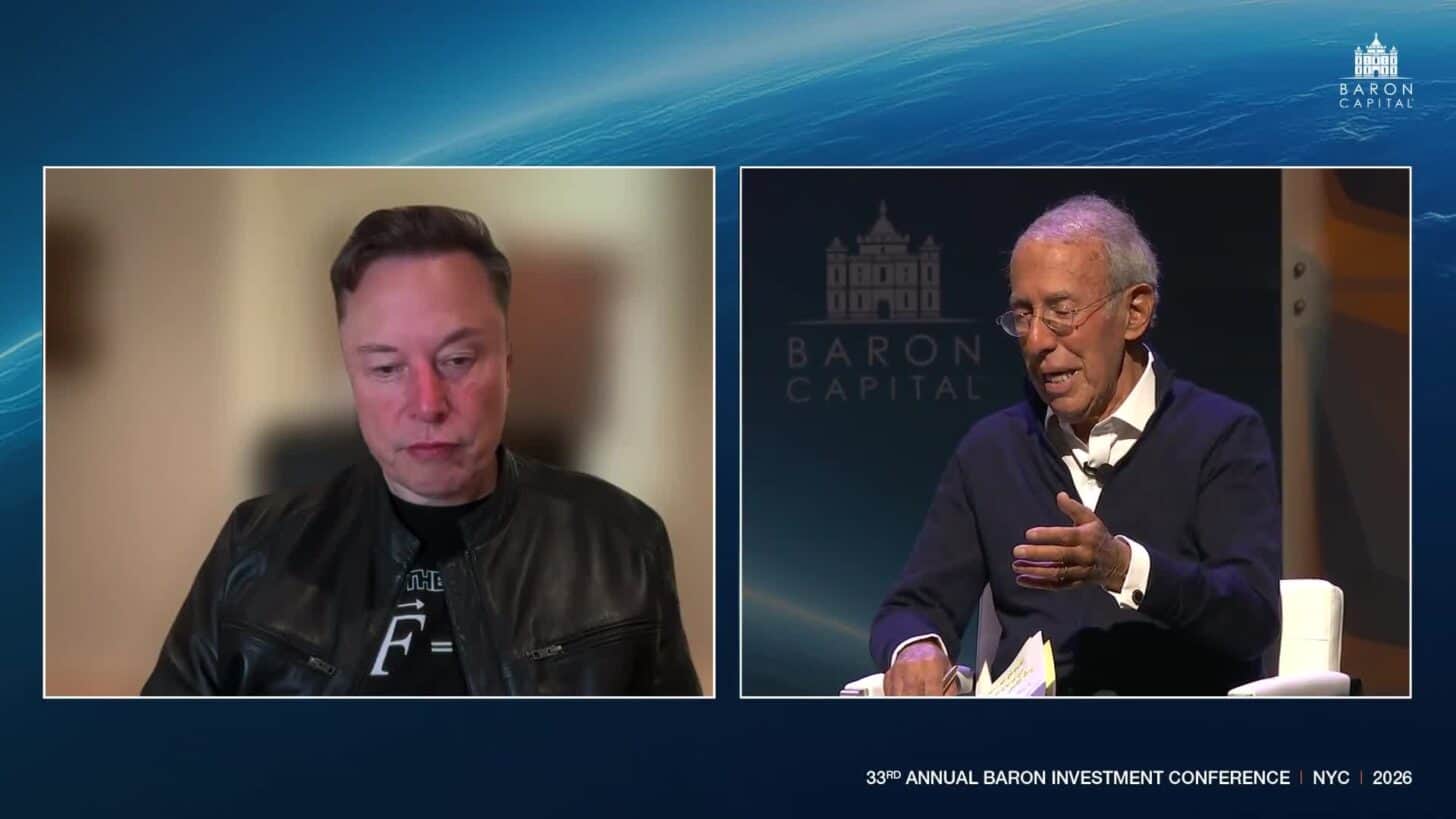
Elon Musk shared major updates on Tesla, SpaceX, Starlink, AI chips and humanoid robots on Friday during the 33rd Annual Baron Investment Conference in New York City, including some ambitious financial projections and new timelines for upcoming projects.
Speaking virtually with billionaire investor Ron Baron during a fireside chat at Lincoln Center on November 6, Musk discussed Tesla’s massive Terafab semiconductor project, SpaceX’s rapidly expanding AI business, new Starlink satellites and the next big milestone for Starship.
The conversation offered investors a closer look at how Musk plans to scale his businesses over the next several years. Tesla North previously reported on Musk’s return to the Baron Investment Conference, where the longtime Tesla investor has regularly discussed his confidence in Musk’s companies.
Tesla’s Terafab Could Produce 30 Times Today’s AI Chips
One of the biggest topics was Terafab, Musk’s proposed semiconductor manufacturing operation in Texas.
Musk said the goal is to eventually produce one terawatt of AI chips annually, roughly 30 times his estimate of global annual production in 2027.
“It’s terrifyingly large,” Musk said, explaining the name Terafab refers to terawatts rather than Earth.
He acknowledged the enormous risks involved, saying, “Now, now, obviously, you know, a plan like this. I think if if it if it fails, it’ll be crazy, and if it succeeds, it’ll be audacious.”
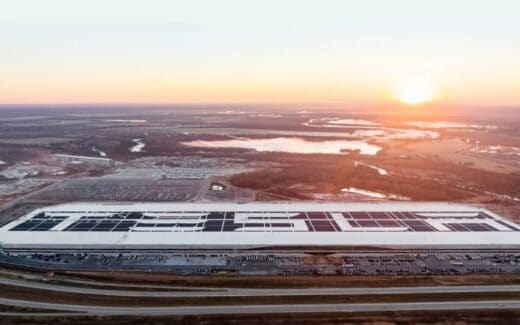
Musk confirmed Tesla is building a research fabrication facility at Gigafactory Texas in Austin, where engineers will experiment with new chip manufacturing processes. Successful techniques would eventually be transferred to the larger Terafab production facility planned for Grimes County, Texas.
He believes the research operation could dramatically accelerate chip development, explaining, “Something that would normally take a year, I think we we may be able to reduce to a month.”
The project has already attracted attention from major chipmakers, with TSMC confirming discussions about a potential role in Terafab last month.
SpaceX Could Reach $500 Billion Revenue Run Rate in 2027
Musk also shared aggressive financial forecasts for SpaceX, which acquired his AI company xAI earlier this year.
He said the combined business is tracking toward an annualized revenue rate exceeding $100 billion by December 2026.
Looking ahead, Musk expects that figure could exceed $500 billion by December 2027, a projection he previously discussed during SpaceX’s third-quarter earnings call.
“So, so we are tracking to have an annual rate of revenue that is in excess of 100 billion dollars in December,” Musk said.
He added that next year’s annual recurring revenue could surpass $500 billion, but cautioned investors against treating the forecast as guaranteed.
“This just this this not a promise. This just this what I think will happen. This my best guess.”
Musk even suggested $1 trillion in annual recurring revenue was no longer impossible, although he estimated the probability at only around 2%.
These figures are forward-looking projections, not confirmed annual financial results.
SpaceX’s StarMind AI Computers Could Launch in 2027
Another major announcement involved StarMind, SpaceX’s planned space-based AI computing network.
Musk said SpaceX expects to begin launching StarMind computers co-designed with NVIDIA in the third quarter of 2027.
“We expect to start launching the first StarMind computers, which we’ve co-designed with NVIDIA, probably. I’m just guessing here, but in the third quarter of next year,” Musk said.
He expects deployments to increase significantly during 2028, followed by much larger volumes in 2029.
SpaceX previously announced its partnership with NVIDIA to bring Rubin GPUs and Vera CPUs to the StarMind satellite network. The company has also shown plans for a constellation of up to one million AI satellites.
According to Musk, placing AI computing infrastructure in orbit could eventually be substantially cheaper than building traditional data centres on Earth, thanks to continuous access to solar power and lower launch costs.
“The cost of of intelligence in space is dramatically less than the ground once you have a low cost per ton to orbit.”
Starship Could Attempt Historic Catch Next Week
Musk also revealed that SpaceX is preparing to attempt something it has never done before: catching a returning Starship upper stage with the launch tower’s mechanical arms.
The attempt is expected to involve Ship 42, which SpaceX previously tested with its Mechazilla launch tower in preparation for the manoeuvre.
“So that’s what we’re going to do in about a week from now,” Musk said.
SpaceX has already demonstrated controlled Starship landings in the ocean, but returning the spacecraft directly to the launch tower would represent another major step toward full reusability.
Musk said developing a reusable orbital heat shield has been one of the company’s greatest challenges.
“It’s an incredibly difficult thing to do, and it’s something that we’ve been working on for a decade, basically. It’s so hard.”
He also believes Starship could eventually reduce launch costs below $100 per kilogram, making large-scale space infrastructure far more economical.
Starlink Could Deliver 100 Times More Bandwidth
Musk also outlined major improvements coming to Starlink. He said SpaceX has started launching its third-generation Starlink satellites, which offer more than ten times the capability of their predecessors.
“Version three satellite has over ten times the capability of version two satellite, and we’ll be launching ten times as many of them,” Musk said.
SpaceX successfully deployed 26 operational Starlink V3 satellites during Starship Flight 14 in September, marking a major milestone for the next-generation network.
He expects Starlink’s overall bandwidth capacity to increase approximately 100-fold within two to three years, with another major leap planned for Version 4 satellites.
In another interesting comment, Musk raised the possibility that SpaceX could eventually acquire a traditional telecommunications company to gain access to additional wireless spectrum.
“We could just acquire that legacy telco and use their spectrum, you know, ten times more effectively.”
No specific acquisition target was announced.
Tesla Optimus Robots Could Transform Productivity
Turning to Tesla’s Optimus humanoid robot, Musk suggested robots could eventually deliver at least five times the weekly productivity of human workers by operating continuously.
“So, so I say a minimum productivity expectation for human robot would be five times that of a human,” he said.
Musk estimated that approximately 20 million to 30 million sufficiently capable humanoid robots could theoretically match the productive output of the United States.
He also suggested robots could initially cost about as much to manufacture as cars, with production costs eventually falling significantly.
When Baron asked whether Tesla would sell or rent its humanoid robots, Musk indicated that renting would probably be the preferred business model.
Tesla has not announced a consumer ordering timeline for Optimus. Musk recently denied a report that reservations would open in December.
These remain estimates of future capabilities rather than demonstrated production-scale performance.
Ron Baron’s Billions Invested in Tesla and SpaceX
The interview also highlighted Baron’s long-standing relationship with Musk and his companies.
Baron Capital invested approximately $400 million in Tesla between 2014 and 2016, years before the automaker became one of the world’s most valuable companies.
The investment firm also began backing SpaceX in 2017, long before Starlink became a major commercial business.
In an April 2026 shareholder letter, Baron disclosed that his firm’s SpaceX investment had grown to approximately $15 billion, generating roughly $13 billion in gains from an initial $1.75 billion investment.
Tesla was valued at approximately $4.7 billion in the firm’s holdings at the time.
By September 30, 2026, SpaceX represented 32.6% of long positions in the Baron Partners Fund, while Tesla accounted for another 13.4%.
Baron has repeatedly expressed confidence in Musk’s companies, including his recent comments that Tesla stock was worth buying as Full Self-Driving adoption grows. Friday’s discussion reflected that optimism as he pressed Musk on the potential scale of Tesla’s robots, SpaceX’s orbital computing business and future revenue growth.
The conversation ended on a more personal note when the 83-year-old Baron asked Musk how he wanted people to remember him later in life.
Musk replied that he hoped the reality would be that he “made a significant contribution in the furtherance of civilization.”
Tesla news, every morning.
Software updates, deliveries, FSD rollouts. Five minutes. Free.