Image: Tesla
Tesla‘s vice president of vehicle engineering has walked through how the new Roadster’s fans, wings and thrusters work, and the car’s powertrain too. That’s according to Hagerty, whose host Henry Catchpole sat down with Lars Moravy in a SpaceX hangar for a 27-minute interview recorded the day before the Oct. 15 reveal. Everything below is what Moravy and the host say in that film, not a new spec sheet from Tesla.
The Roadster is rear-wheel drive only, which Catchpole calls a surprise. Moravy says two motors in the back make “over a megawatt” of power and over 1,400 newton meters of torque, and that the pair “has more torque and power than a Plaid.” The host cites 1,341 horsepower and 1,033 lb-ft for the Performance model. The motors run through planetary gear sets with an 8.4 reduction, with no differential and independent control of each side.
The battery uses Tesla’s 4680 cells in aluminum cans, with double-sided cooling and a titanium upper plate that Moravy says is thinner and lighter than the usual steel. The pack runs at roughly 800 volts, and the goal is a 15 to 80 percent charge in about 10 minutes. The range is claimed at over 300 miles, but the battery’s kilowatt-hour size wasn’t shared. Moravy says final weight numbers are still coming, with a ballpark of “just under 1,700 kilos,” or roughly 3,700 pounds.
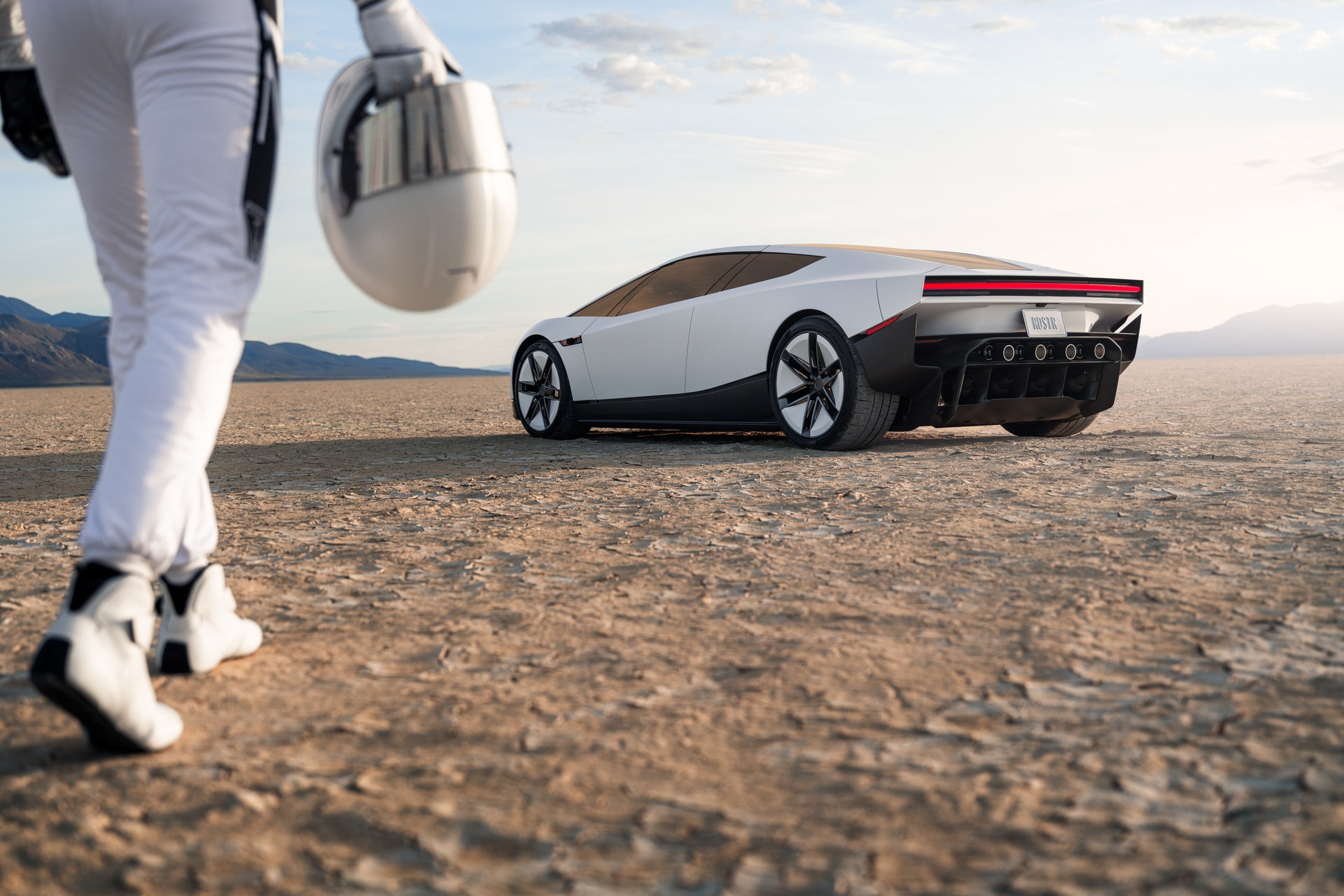
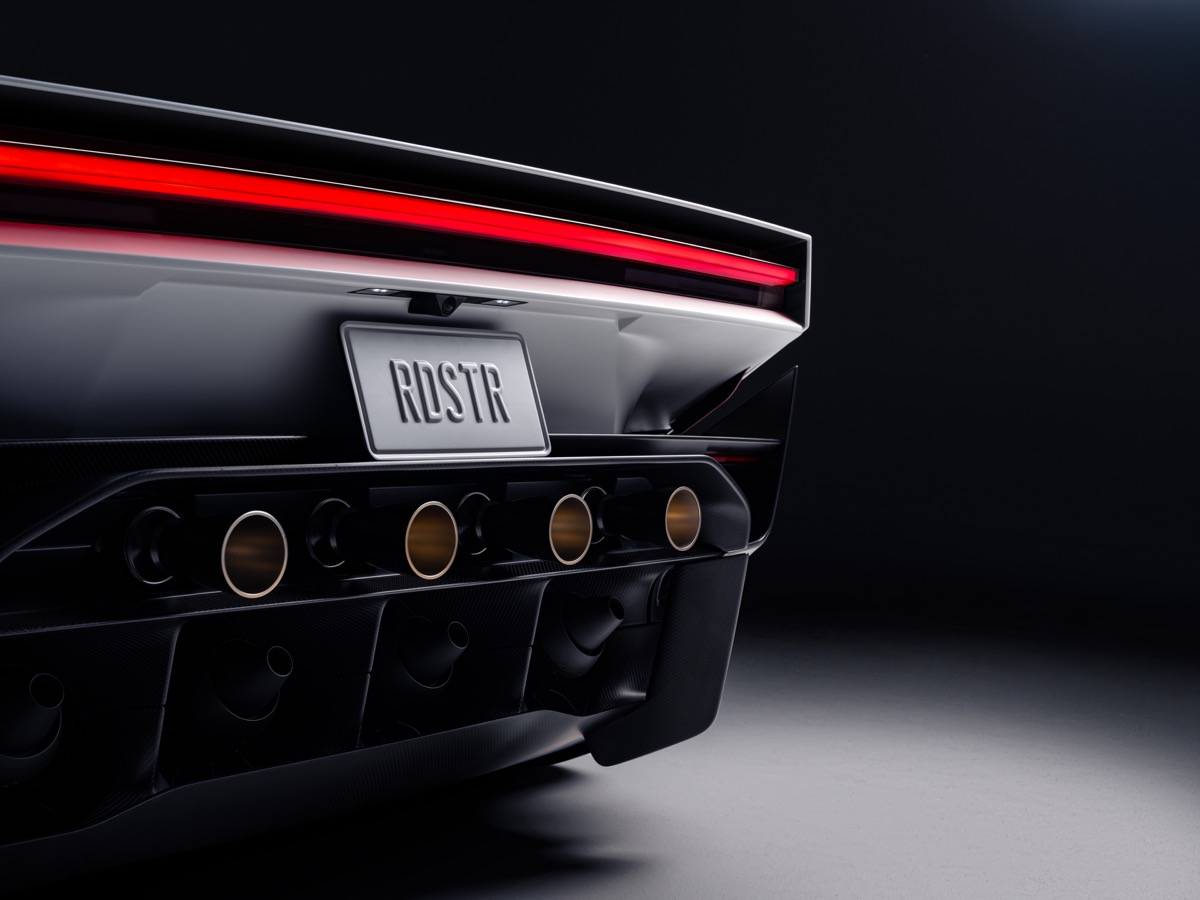
Most of the film is about airflow. Moravy says the front wings can move up to 80 degrees, the side barge boards pop out, a vent above the hood opens, and the rear wing can produce up to 2 G of downforce over 200 mph. The wing is moved by leg actuators from Tesla’s Optimus robot, and he says “nobody in the world is better at making the actuators than us.” The host adds that track mode drops the ride height 40 mm and triples the suspension stiffness.
Below about 50 mph, a wing does little, so the Roadster adds four fans of roughly 20 kilowatts each, built on the same motor family as the heat-pump compressor. Moravy calls it “what we call a sucker system,” with four independent skirts sealing the car to the road. He says that holds over 2 G in a corner from 0 to 50 mph. It’s the same idea as the fan patent Tesla was granted in late September, though neither source ties the two together.
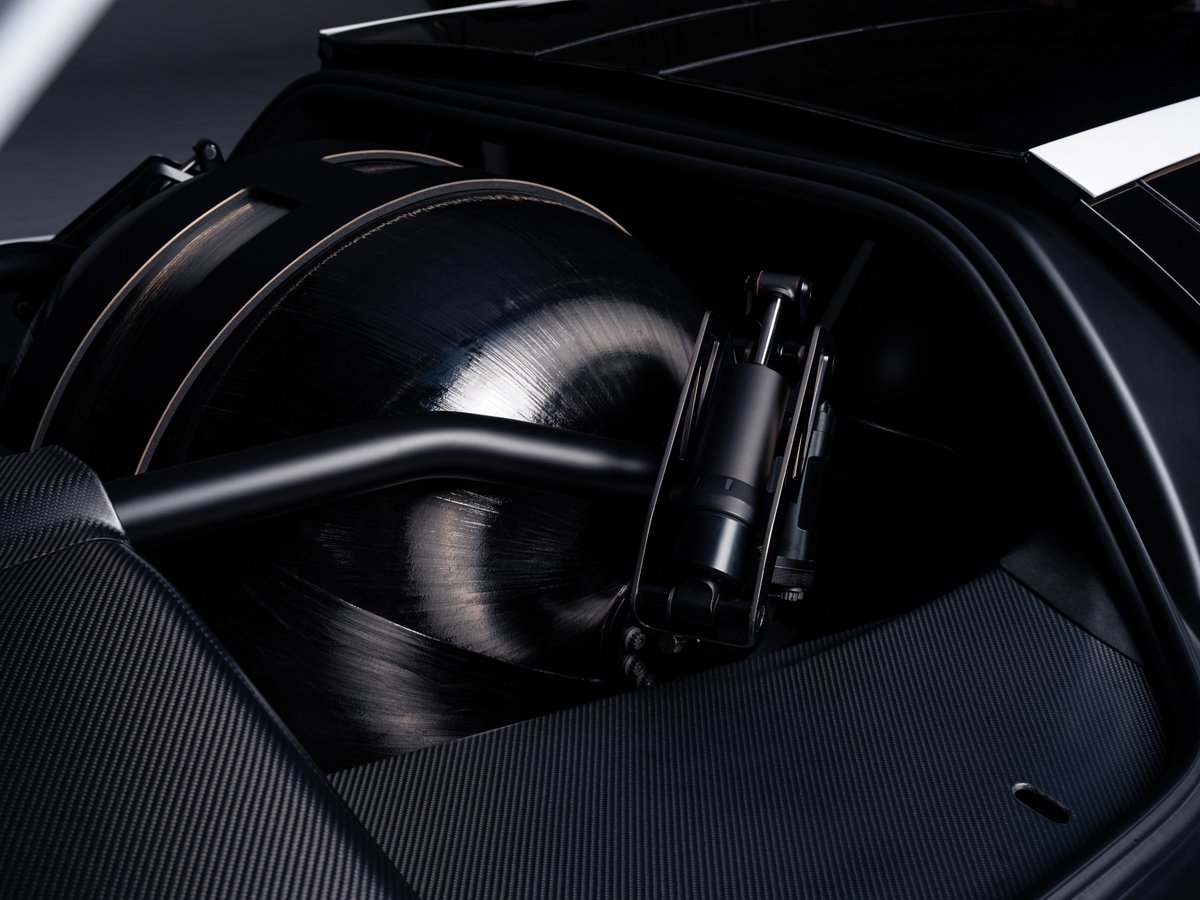
The thrusters come from SpaceX. A 200-liter carbon-wrapped tank holds up to 10,000 PSI of nitrogen and feeds thrusters producing over 80 kilonewtons, and Moravy says “nitrogen seemed like a good fuel” for a car. The Rocket version adds another 400 liters, for 600 in total, and six more thrusters, one in each corner and two at the front to yaw. It becomes a single-seater, and filling all 600 liters takes 6 to 7 hours today, with a goal of about half an hour.
The acceleration numbers don’t all match Tesla’s reveal. Moravy says the Roadster can do 0 to 60 mph in 0.55 seconds, and the host notes that’s a rollout figure, so it would be a tenth or two slower. He puts the Performance model at 1.6 seconds with fans only, and the Thrust model at 0.85 seconds rollout-subtracted, with over 5 G and a top speed that rises from 210 to 230 mph. In our reveal story, Tesla’s stated targets were under 0.9 seconds for Thrust and under 0.59 for the Rocket, with 230 mph or more for the Rocket. Tesla also posted a 0.81-second run. Those remain targets, and the interview doesn’t change that.
Moravy says everything except the SpaceX thrust and flight packages is Tesla’s own, including the battery, powertrain, chassis, body structure and the suction system. Other details include pop-down headlights that he says are “kind of cooler” than pop-up ones, two seats, removable roof panels and a brake-by-wire and steer-by-wire setup in the host’s narration. Tesla has four or five prototypes now, with a bigger build early next year, and a base model is still in development.
For more on the cabin, see Sawyer Merritt’s event videos of the touchscreen UI. Tesla hasn’t announced pricing, and reservations require a $50,000 deposit.
Which of these Roadster systems are you most curious to see work in person?