Video Shows Driverless Cybercab Charging as One Worker Handles 10 Robotaxis
A 57-second video posted by X user Abhimanyu Yadav shows what he describes as an empty Tesla Cybercab arriving at a public Supercharger, where a worker he calls a Tesla employee plugs in 10 robotaxis. The clip has topped 162,000 views.
A Tesla Cybercab has been filmed arriving at what the poster calls a public Supercharger with no one inside, offering a look at how a single worker might handle charging for 10 robotaxis as Tesla works toward scaling its autonomous fleet.
The 57-second video was posted on October 2 by X user Abhimanyu Yadav, who said the empty Cybercab drove in alongside nine Model Ys at night. The clip has drawn more than 162,000 views.
“This is how Tesla charges unsupervised robotaxis at a public supercharger,” Yadav wrote, describing the scene. “Here is a driverless Cybercab showing up with no one in it. There are 9 other Model Ys that showed up too. A Tesla employee is walking around and plugging each of them in.”
The words “unsupervised,” “public supercharger,” and “Tesla employee” are the poster’s own characterizations; they have not been independently verified.
The setup offers an early example of how Tesla could manage charging before automated charging systems become commonplace. Instead of assigning one worker to each vehicle, a single person can service several autonomous cars while the vehicles handle the driving themselves. Tesla is already building dedicated Superchargers just for its Robotaxi fleet, though the poster says his clip shows public stalls doing the job for now.
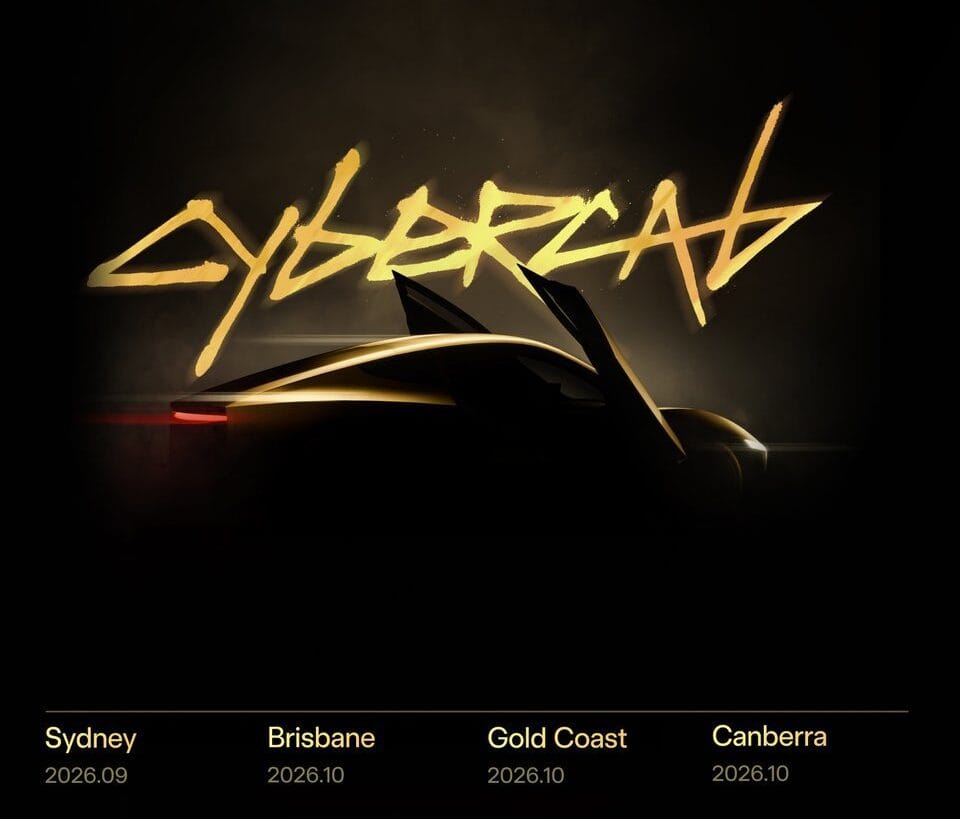
Tesla opened Cybercab rides to the public in Austin, Texas, on Friday, September 4 at 5 p.m. CT, a day after its launch event. Cybercab is a purpose-built two-seat robotaxi with no steering wheel or pedals, designed to operate through Tesla’s Robotaxi network.
Tesla’s Robotaxi app now lets anyone hail a Cybercab in Austin, and the company recently extended service hours in the city to 11 p.m.
The rollout is also under federal scrutiny, as NHTSA opened an investigation into Tesla’s certification of nearly 1,000 Cybercabs and whether the vehicles meet federal safety standards.
What comes next is more charging to manage: as more driverless vehicles enter service, keeping the fleet powered will matter as much as keeping it driving. Automated charging and dedicated Robotaxi Superchargers could eventually take the plugging-in out of human hands, but for now Yadav’s clip shows the transition being handled one cable at a time.
Tesla news, every morning.
Software updates, deliveries, FSD rollouts. Five minutes. Free.