SpaceX Deploys 26 Starlink Satellites on Starship Flight 15
SpaceX deployed 26 Starlink V3 satellites on Flight 15 after Super Heavy diverted offshore. Starship’s planned return and tower catch are still ahead.

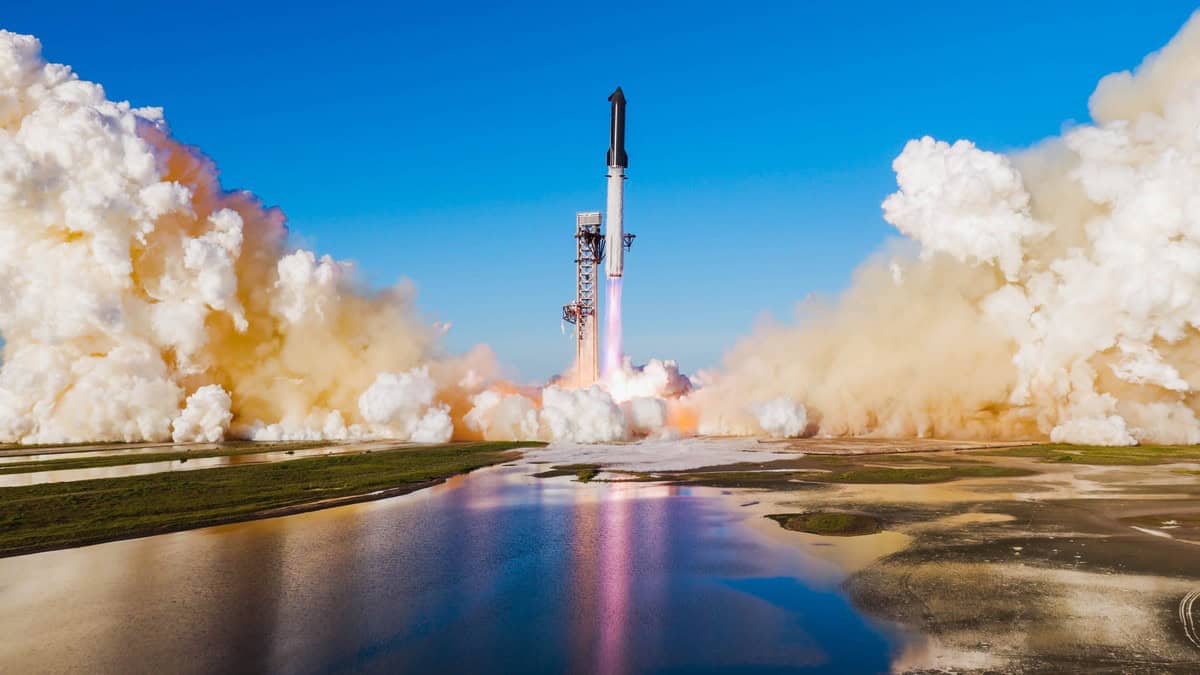
Image: SpaceX.
SpaceX has deployed all 26 Starlink V3 satellites aboard Starship Flight 15, completing the mission’s payload delivery after its Super Heavy booster diverted to an offshore splashdown instead of returning to the launch tower.
The November 13 flight is still underway. Starship reached orbit and entered a long coast around Earth, with its planned return to Starbase still ahead. A successful satellite deployment does not mean the company has completed its first upper-stage tower catch.
“Payload deploy complete. All 26 @Starlink V3 satellites are in orbit,” SpaceX said in its update.
The company had earlier said the deployment sequence would take about 42 minutes. After it finished, SpaceX said teams would monitor the ship over roughly another 21 hours in orbit. It also kept early deorbit options available if needed, while reporting that systems were looking good at the time of the update.
No booster catch this time
Flight 15 began with a more ambitious target: bring both the Super Heavy booster and the upper-stage Starship back to Starbase. The two returns were never meant to happen together. Super Heavy was due back shortly after launch, while the ship would spend more than 22 hours in flight.
The booster did not return to the tower. SpaceX said it diverted to an offshore splashdown in the Gulf. That ended the possibility of completing both catches on this flight, but it did not stop the upper stage from carrying out its satellite mission.
Starship first completed its ascent onto a planned suborbital trajectory, then received permission to perform an orbital burn. SpaceX subsequently confirmed that the burn put the ship into Earth orbit for the second time, before the satellite deployment began.
What comes next
The remaining challenge is bringing the ship home. SpaceX’s Flight 15 plan calls for approximately 14 orbits before a return attempt. Three of the Starlink satellites carry cameras intended to inspect the ship’s heat shield, giving controllers another way to assess its condition before reentry.
As outlined in the original mission plan, the spacecraft will only approach Starbase if its reentry, landing-burn and tower-approach systems pass the required checks. SpaceX has options to end the flight over the ocean if a safe return is not possible.
For Starlink customers, the payload is the practical part of the mission: another batch of the company’s larger V3 satellites is now in orbit. That is separate from the recovery test, and deployment alone does not establish when the satellites will start serving customers.
For SpaceX, recovering the upper stage would be a step toward reusing the entire launch system rather than just its booster. Bringing Starship back from orbit and catching it with Mechazilla’s giant “chopsticks” would be an incredible feat. The ship has to survive atmospheric reentry, control its descent and reach the tower accurately enough for those arms to catch it. Even a successful catch would still leave refurbishment and reflight to prove.
SpaceX confirmed the completed deployment and subsequent coast phase in its official updates. At the latest check, it had not announced a completed ship return or catch.
Can SpaceX bring Starship back to the tower after delivering its satellites?
Tesla news, every morning.
Software updates, deliveries, FSD rollouts. Five minutes. Free.