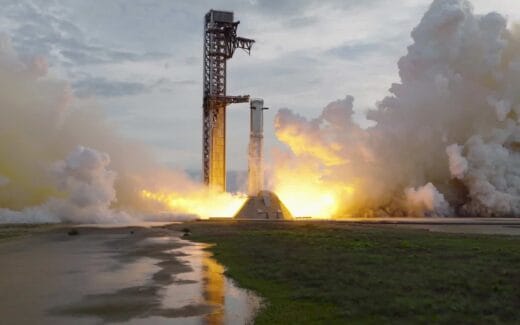
SpaceX Reveals Ambitious Starship Flight 15 Plan for First-Ever Catch

SpaceX has revealed its plan to bring the Starship spacecraft back to its launch site for the first time during Flight 15, setting up a historic tower catch attempt at Starbase, Texas.
The company outlined the mission in a new official update on Saturday, detailing how Starship could return to the same launch complex after spending roughly 21 hours in space. The mission would mark another major step toward full reusability for Starship and Super Heavy, with both stages intended to return to the launch site.
Flight 15 is currently targeting November 13, 2026, and SpaceX plans to begin the flight on a passively safe suborbital trajectory, the same profile used on Starship’s first orbital mission. If anything goes wrong during ascent, Starship would reenter over a cleared area of the Indian Ocean.
After ascent, flight controllers will assess the health of Starship’s systems before giving a go or no-go for orbit. If the call is go, Starship will perform an orbital insertion burn with a single Raptor sea-level engine, then deploy its payload of Starlink V3 satellites. Three of those satellites have been modified to acquire imagery of Starship’s heatshield, giving engineers another way to judge whether the ship is ready to come home.
Starship will then coast in orbit for about 21 hours until its orbit lines up with Starbase, with flight controllers running manual and automated checks throughout, covering Raptor engine health, power and communications, flight computers and navigation sensors, propellant tank integrity, tank pressure, and attitude control. If conditions turn against a return, the mission can end early with splashdowns in precleared areas of the Pacific Ocean near Hawaii or off the coast of Chile, the same areas used during Flight 14.
The return itself is the hard part. Starship will fly over inhabited areas in northern Mexico and southern Texas on its way back, weaving around cities in the Rio Grande Valley, passing north of South Padre Island and out over the Gulf of America before turning south toward Starbase. SpaceX says the flight profile is designed with chances to end the mission early if needed and will follow strict criteria before committing to the final phases.
Flight controllers will only permit the return if Starship meets conditions SpaceX developed internally and the Federal Aviation Administration approved. If those conditions are met, Starship will perform a deorbit burn with a single Raptor 3 engine and reenter over the Pacific Ocean, thousands of kilometres uprange from Starbase, steering with its four control flaps.
As Starship descends toward the South Texas coast, residents of Cameron County may hear one or more sonic booms. SpaceX says a sonic boom does not present a health risk and what people experience will depend on weather and other conditions.
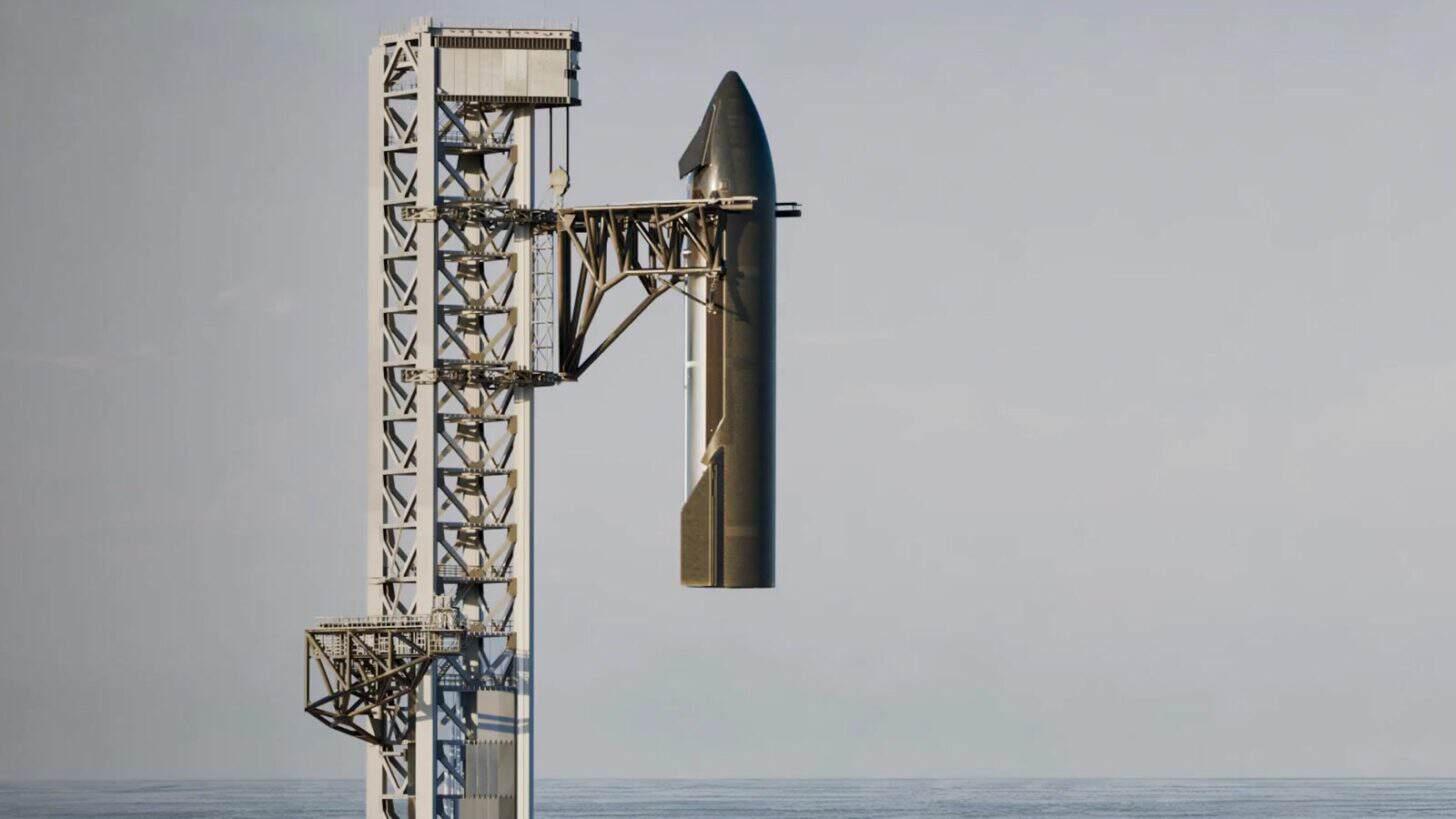
Over Starbase, Starship will perform its final bellyflop toward the tower at Pad 2, then ignite its three sea-level Raptor engines and flip itself vertical while stowing its flaps. It will down-select to two engines and move between the tower’s mechanical arms, then to a single engine as it comes to a near hover. The arms will close rapidly to catch Starship on its two catch fittings just below the forward flaps, and once contact registers, Starship will shut down its final engine.
SpaceX previously outlined plans for a dual tower catch during Flight 15, with the booster returning to the tower and Starship following later. If both catches succeed, it will mark the first time every part of an orbital rocket returns to Earth intact.
The attempt builds on years of reentry testing. Earlier flights ended with ocean splashdowns while SpaceX stress-tested the heatshield, at times removing dozens of tiles and exposing vulnerable areas to reentry heating. The company calls full recovery of an orbital launch system the holy grail of rocketry, since it opens the door to airplane-like turnaround.
SpaceX has also continued to update its engine design, recently detailing Raptor 4 engine changes including work on the outer ring to support higher performance and faster reuse.
For now, Flight 15 is a major step in SpaceX’s effort to make its most powerful rocket fully reusable. A successful return would show the system is ready to fly again soon, and it would put SpaceX closer to the rapid reuse needed for Moon missions, a bigger Starlink network, and eventually making life multiplanetary.
Tesla news, every morning.
Software updates, deliveries, FSD rollouts. Five minutes. Free.