Canada Proposes Raising EV Luxury-Tax Threshold to $150,000
Ottawa wants to lift the federal luxury-tax threshold for qualifying electric vehicles from $100,000 to $150,000, but parliamentary approval is still required.
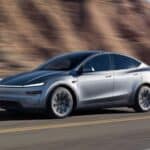

Canada is proposing a higher luxury-tax threshold for fully electric and hydrogen-powered vehicles, a change that could take the federal levy off more expensive EVs.
Finance Minister François-Philippe Champagne announced the proposal on November 12. The threshold would rise from $100,000 to $150,000 CAD for qualifying vehicles, while other vehicles would remain at $100,000.
Ottawa says the measure is intended to apply from November 13, 2026, subject to subsequent parliamentary approval. It is a proposed change, not a completed parliamentary decision.
What would change for EV buyers?
The draft legislation creates a qualifying electric vehicle category covering fully electric and fully hydrogen-powered vehicles, with provisions for prescribed vehicles. It would assign that category the higher $150,000 threshold under the Select Luxury Items Tax Act.
For an ordinary vehicle sale, the proposed transition looks to when the sale is completed under the Act, not simply when someone placed an order. Separate provisions address imports, registration and an owner granting another person the right to use a vehicle. Buyers should confirm how the final rules apply to their transaction rather than assume every existing order qualifies.
The existing federal tax is calculated as the lesser of 10% of the vehicle’s full value or 20% of the amount above the $100,000 threshold. Raising the threshold is not the same thing as sending every buyer a fixed rebate, and it would not make every EV purchase tax-free.
How much could buyers save?
In plain English, a qualifying EV with a taxable value between $100,000 and $150,000 would no longer attract this federal luxury tax under the proposal. At $120,000, the tax would fall from $4,000 to zero; at $140,000, it would fall from $8,000 to zero. At exactly $150,000, the saving would be $10,000. These examples use the taxable value, not just the advertised sticker price, and exclude any resulting sales-tax effect.
More expensive EVs could also receive a smaller luxury-tax bill. At a taxable value of $160,000, for example, the levy would fall from $12,000 to $2,000. This is a reduction in tax, not a cash rebate. GST/HST and applicable provincial taxes would still need to be considered.
Would Cybertruck buyers benefit?
Not necessarily: weight matters before price. The federal luxury-tax definition only covers vehicles with a gross vehicle weight rating of 3,856 kg or less. That is the vehicle’s maximum rated loaded weight, not its empty weight.
Tesla lists Cybertruck Dual Motor All-Wheel Drive at 3,900 kg GVWR, Premium All-Wheel Drive at 4,007 or 4,159 kg, and Cyberbeast at 4,020 or 4,159 kg, depending on configuration. Those ratings exceed the federal limit. On that basis, those versions already fall outside this luxury tax, so the higher EV threshold would not create a new luxury-tax saving for them, regardless of delivery timing.
Tesla also lists a lighter Long Range version at 3,719 kg. Buyers should check the exact Canadian vehicle’s certification label and invoice rather than assume every Cybertruck is treated identically. This article does not confirm Canadian availability, a delivery date or eligibility for that lighter version.
For a vehicle subject to the tax, November 13, 2026 is the proposed start date, not a deadline to take delivery before then. The draft covers ordinary sales completed after the November 12 announcement. Under the Act, completion generally occurs at the earlier transfer of possession or ownership, not merely when an order or deposit is placed. Parliamentary approval is still required; the proposal does not guarantee a refund on an earlier completed purchase or a particular buyer’s final bill.
A federal change, not a provincial sales-tax announcement
Canadian EV buyers have seen threshold changes before. In 2022, British Columbia raised its provincial luxury-surtax threshold for passenger zero-emission vehicles, which affected certain Tesla purchases at the time. That was a separate provincial measure, not the federal tax Ottawa is proposing to change now.
The Department of Finance says the proposed higher EV threshold recognizes the higher upfront cost of zero-emission vehicles. Its accompanying legislative proposals spell out the eligibility category and transition rules.
The weight comparison uses Tesla’s owner-manual specifications and the Canada Revenue Agency’s definition of a subject vehicle; a buyer’s exact configuration and transaction still need checking.
For now, the key distinction is between Ottawa’s intended start date and the approval still needed to put the proposal into law. No specific Tesla model’s final invoice or eligibility is established by the announcement alone.
Should Canada raise the luxury-tax threshold for electric vehicles, or use the money to help buyers of lower-priced EVs instead?
Tesla news, every morning.
Software updates, deliveries, FSD rollouts. Five minutes. Free.

[…] hydrogen-powered vehicles, while the threshold for other vehicles would stay at $100,000, reports Tesla North. Finance Canada announced the change on November 12 and wants it to take effect November 13, 2026, […]