Courtesy of Tesla, Inc.
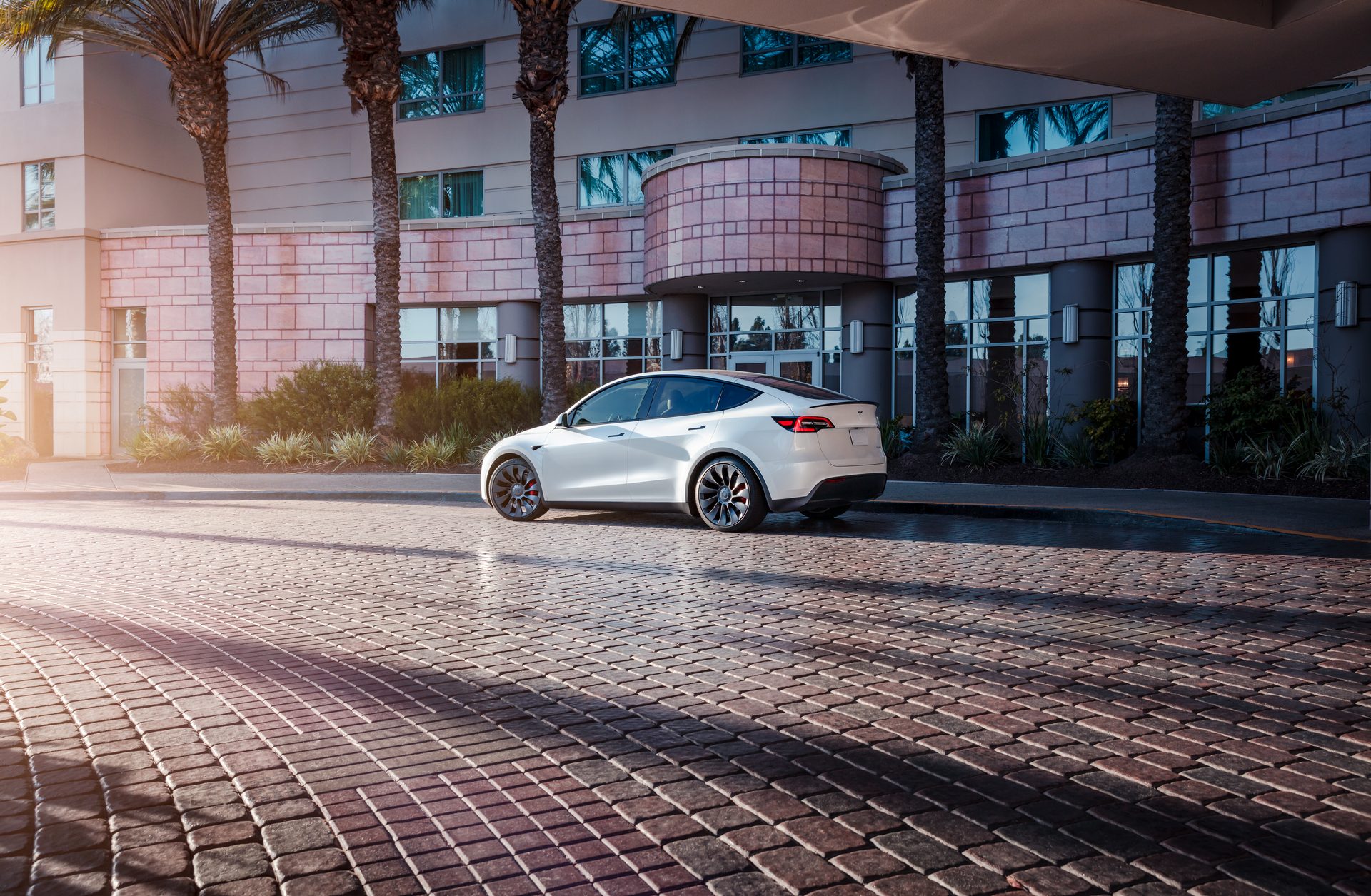
Under U.S. President Joe Biden’s recently-signed Inflation Reduction Act (IRA), passenger electric vehicles (EVs) can qualify for a tax credit of up to $7,500 USD. The eligibility criteria for these tax credits, however, have left Tesla’s Model Y at a slight disadvantage.
While the seven-seat variant of the Model Y qualifies for the federal tax credits offered under the IRA as of January 1, 2023, the five-seat version of the Model Y doesn’t.
This has to do with the incentive program only classifying the seven-seat Model Y as an “SUV,” even though it’s structurally almost identical to the five-seater. Tax incentive eligibility for non-SUVs is capped at an MSRP of $55,000, which the Model Y exceeds.
One Twitter user on Sunday explained in a series of tweets why the two Model Y variants are treated differently by the IRA and what Tesla could do to make all Model Y trims eligible for the $7,500 tax credit.
“The IRA splits EVs into 2 categories “other” and truck/van/SUV. This is key because “other” autos only qualify for the tax credit if MSRP (plus options) is under $55k while SUVs/Vans/Trucks may be priced up to $80k while still qualifying for the $7500 rebate,” explained @BullAdamJonas.
According to them, the only requirement for the “SUV” classification that the five-seat Model Y doesn’t meet is a running clearance of 7.9 inches (or 20cm). “Model Y clearance is already 6.8” so only a 1.1” raise is needed assuming angular requirements will then also be met.”
Of course, all non-eligible Model Y trims would need a new suspension to achieve higher running clearance. The Twitter user estimated that a new suspension would only increase Tesla’s bill of materials for each unit by less than $100, but they weren’t able to gauge the one-time cost of the tooling and engineering that would go into implementing such a solution in Tesla’s factories.
Volkswagen reportedly did something similar for the 2023 ID.4 Pro S and 2023 ID.4 Pro S AWD, increasing the Gross Vehicle Weight Rating (GVWR) for both vehicles to 6,043 lb and raising their clearance to 8 inches to qualify them for the IRA’s EV incentives as SUVs with an upper MSRP limit of $80,000.
Per recent reports, Tesla is gearing up to launch a new Standard Range AWD trim of the Model Y with next-generation 4680 batteries in the U.S. sometime this year. Over the weekend, a Tesla Model Y AWD was spotted in the code for Tesla’s U.S. website with a price tag of $61,990.


This doesn’t explain why the exact same clearance on the 7 seaters would qualify as SUVs while the 5 seaters don’t. Also, raising them would erase some of the aerodynamics that Tesla’s design team worked so hard to get. It seems to me that IRS/IRA silliness here is actually promoting PHEV SUVs with ridiculous efficiencies over the most efficient pure EV vehicles. Hopefully they can be informed of their silliness/errors and make corrections so that Tesla doesn’t have to play silly games in order to take advantage of incentives that they deserve.
7 seats make it an SUV based on the rules listed here: https://www.law.cornell.edu/cfr/text/49/523.5
Tesla could also qualify based on AWD but would require minimum 6000 pound gross vehicle weight too.
This article offers minimum effort to explain why certain trims qualify and why others do not. It actually does not explain it, lol. Head to the Twitter link all details are listed there. Or read this https://www.law.cornell.edu/cfr/text/49/523.5