Musk Predicts 100% of Superintelligence Compute Will Move to Orbit
Elon Musk said Monday that future superintelligence compute will be overwhelmingly in space, rounding up to 100 percent, and backed Sequoia partner Shaun Maguire's plan to publish an orbital compute analysis within two weeks.

Superintelligence compute will end up almost entirely in space, Elon Musk said Monday, extending his late-2028 orbital compute forecast with a harder claim that the share “will round up to 100%.”
Replying to Sequoia Capital partner Shaun Maguire, Musk wrote that “Future super intelligence compute will obviously be overwhelmingly in space,” then defined overwhelmingly as rounding up to 100 percent.
Maguire, who has been circulating a bottoms-up SpaceX financial model, quoted that reply and said he will publish “a systems level analysis of orbital compute over the next week or two,” adding that “Almost all SI compute will be in space.”
Musk answered with a one-word reply: “Absolutely.”
The exchange builds on Maguire’s argument that SpaceX is the low-cost producer for compute that starts on the ground and moves into orbit. Musk’s Monday posts go further than his Friday note that monthly orbital compute deployment will probably pass terrestrial capacity around the end of 2028.
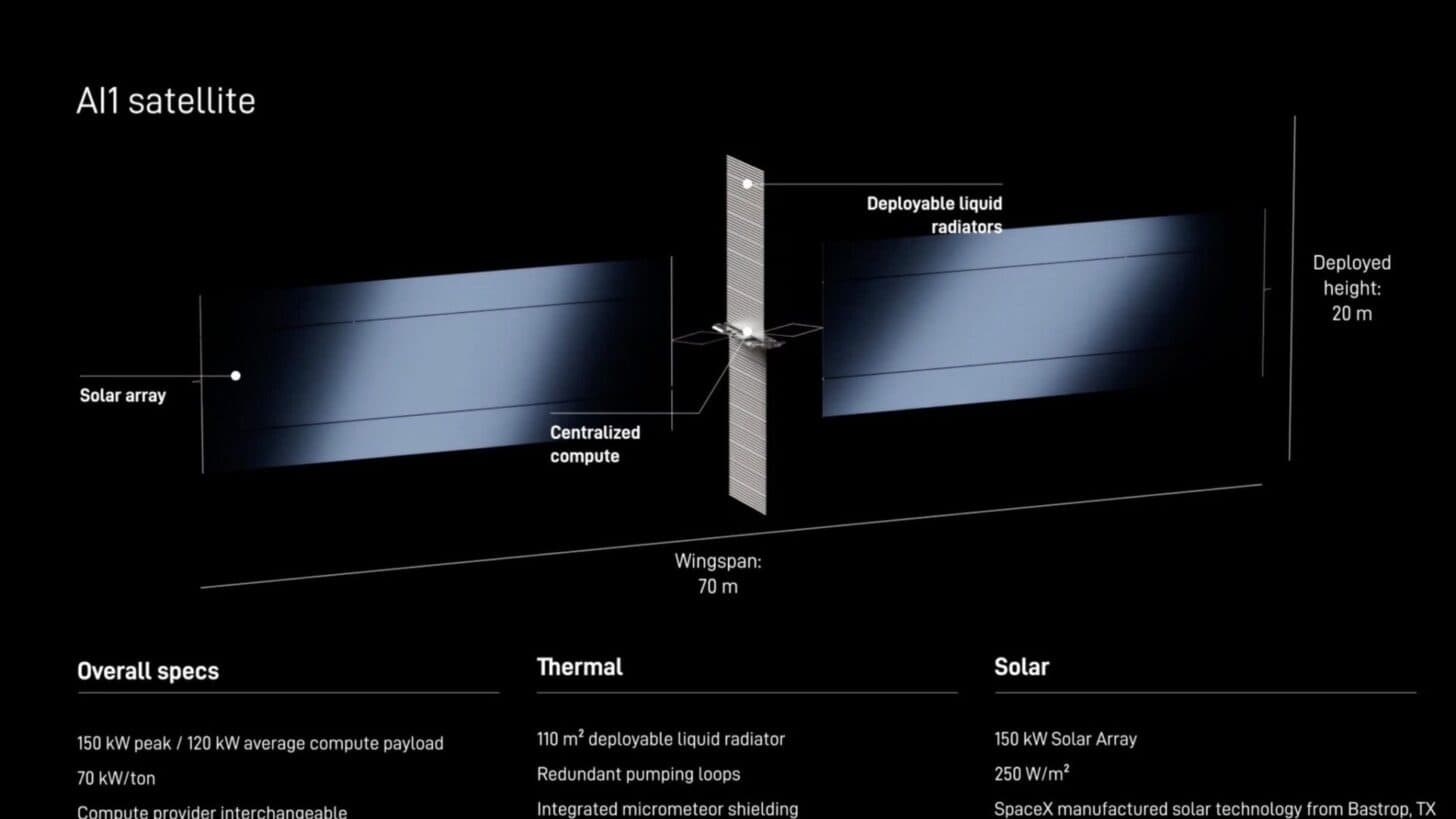
SpaceX has already sketched the hardware path through its planned Star Mind AI satellites, which are meant to fly in large formations with more than 250 kilowatts of solar power each, and a longer-term Starmind constellation concept. Google is also pursuing orbital AI hardware, with its first Project Suncatcher satellite slated for a SpaceX Transporter-18 rideshare after earlier talks about putting data centers into orbit.
Musk’s 100 percent line is a forecast, not a deployment schedule, and Maguire’s systems-level write-up has not been published yet.
Will orbital compute really take essentially all of the superintelligence workload?
Tesla news, every morning.
Software updates, deliveries, FSD rollouts. Five minutes. Free.