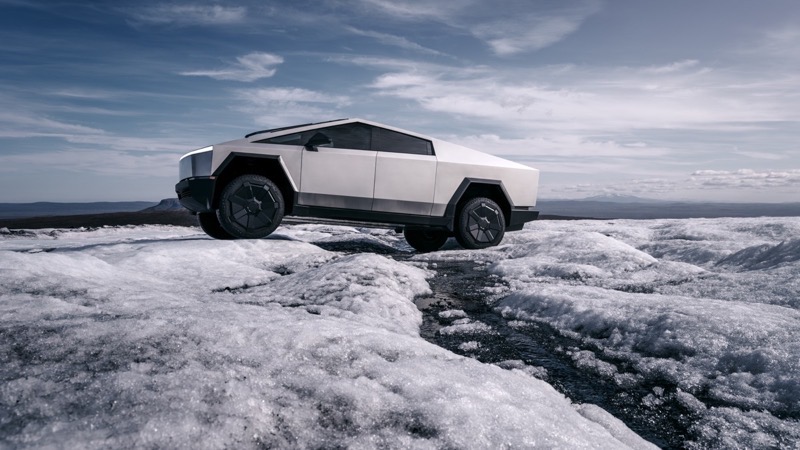
A Tesla Cybertruck owner is crediting the company’s Full Self-Driving (FSD) system with helping him avoid what he believes could have been a deadly head-on crash, according to a recent report from CBS Austin.
The incident took place on a two-lane stretch of Highway 54 in New Mexico, where Cybertruck owner Clifford Lee was traveling at roughly 75 mph with FSD engaged. As Lee explained, an oncoming pickup truck suddenly crossed the center line into his lane, leaving only seconds to react.
According to Lee, FSD intervened at the last possible moment, steering the Cybertruck toward a narrow opening near the guardrail. The maneuver was so tight that the oncoming pickup clipped the Cybertruck’s side mirror, but the vehicles avoided a full collision. Lee walked away uninjured.
“I almost got killed,” Lee told CBS Austin, describing how shaken he was immediately after the incident. “I was shaking uncontrollably for a while.”
While Tesla’s Full Self-Driving system has been the subject of ongoing regulatory scrutiny and legal challenges, the encounter highlights a scenario where the technology appears to have performed exactly as intended. Despite its name, the software is classified as an SAE Level 2 system, meaning drivers must remain attentive and ready to take control at all times when it is engaged.
Tesla has recently made changes aimed at easing new users into FSD, including defaulting first-time drivers to its slowest “Sloth Mode” speed profile. The company has also been pushing adoption through free trials for Hardware 4 (HW4) owners and frequent software updates, with the latest publicly available versions even allowing drivers to text behind the wheel under certain traffic and road conditions.
Notably, Cybertruck only gained access to the full suite of FSD features — such as reversing and advanced parking capabilities — with the rollout of FSD v14 in November. Meanwhile, Tesla continues to internally test “unsupervised” FSD with its Robotaxi fleet in Austin, Texas, signaling where the company ultimately wants the technology to go.
While critics continue to raise concerns about safety, incidents like this offer a counterpoint, illustrating how advanced driver-assistance systems can sometimes make the difference when fractions of a second matter most.


