Elon Musk at DealBook 2026: Tesla, SpaceX Merger Talks and Starlink
Elon Musk discusses a possible Tesla-SpaceX merger, a driverless Model Y, Starlink rooftop microcells and Anthropic’s appetite for more computing power.
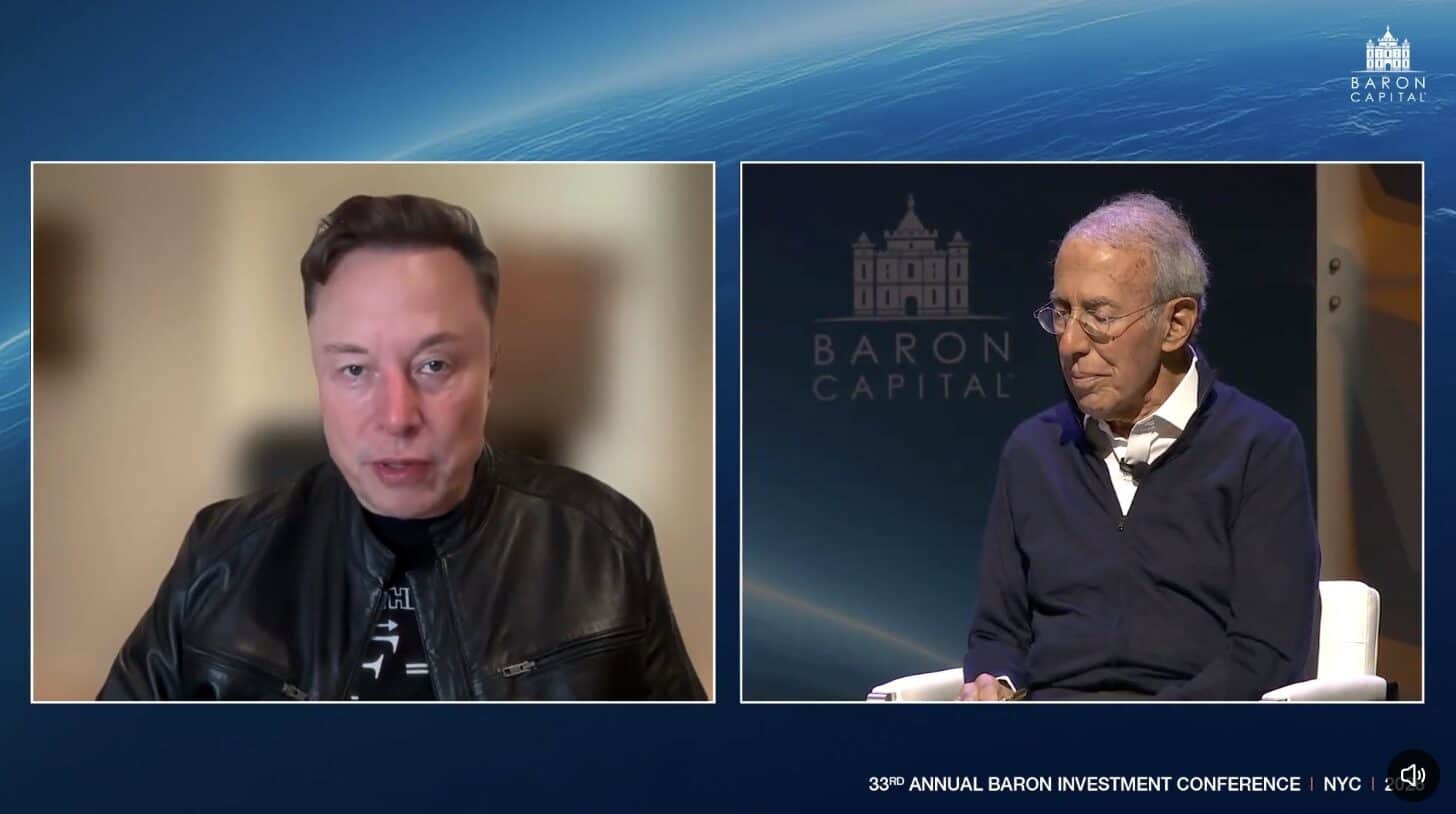
Elon Musk says Tesla and SpaceX could be better together, while outlining plans for a driverless Model Y, rooftop cell sites for Starlink Mobile and potentially much greater AI computing demand.
Speaking remotely from China with Andrew Ross Sorkin at The New York Times DealBook Summit on November 18, Musk spent nearly 47 minutes discussing his companies, their increasingly overlapping technology and the decisions ahead. Here is a closer look at the full conversation.
- Tesla-SpaceX merger and compensation
- Cybercab, Model Y L and a driverless Model Y
- Starlink Mobile and rooftop microcells
- Anthropic and AI computing demand
- Jensen Huang and Nvidia
- Political spending and the MAGA label
- Starlink, Starshield and Ukraine
- Competition, Starship and life beyond Earth
- Closing reflections and full video
Tesla-SpaceX merger and compensation
Musk said “either path is possible” when discussing keeping Tesla and SpaceX separate or bringing them together. Asked whether they would be better together, he answered “probably yes,” pointing to areas of overlap that he said did not exist five years ago.
Both companies have AI software and advanced chip design teams. Tesla’s work centres on real-world applications such as self-driving vehicles and Optimus, while Musk described SpaceX’s AI work as involving large models. He also expects computing in orbit to become increasingly important.
That does not make a merger automatic. Following reports of Tesla-SpaceX merger discussions, Musk said investors would need to assess whether a combined business could execute better and create more value than two separate companies. He acknowledged that mergers often fail to deliver that result.
He said a Tesla shareholder vote might not succeed, and that even when voting his own SpaceX shares he must consider other investors. He could not simply force them into an economically harmful combination. No agreement, valuation or merger timetable was announced during the interview.
Sorkin asked whether a merger should trigger Musk’s Tesla performance awards. Musk said stock options intended to reward Tesla’s execution should not vest simply because it merges with SpaceX. His position was that compensation should follow the original bargain, rather than reward the act of combining the companies.
Cybercab, Model Y L and a driverless Model Y
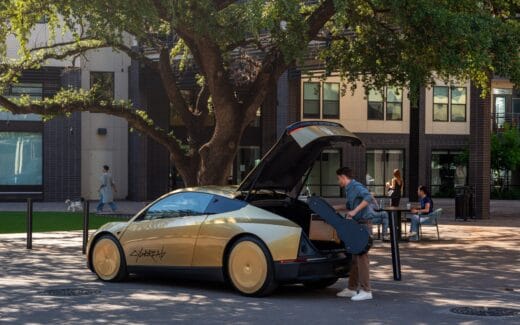
Sorkin raised the shift away from Cybertruck production toward Cybercab and asked whether Tesla would eventually stop selling conventional cars. Musk’s answer focused on the need for vehicles that carry different numbers of passengers.
He argued that a two-seat Cybercab covers about 90% of passenger miles, citing an average occupancy of roughly 1.2 people per car. Those were Musk’s figures, used to explain why Tesla designed Cybercab around two seats rather than a larger cabin.
Families and bigger groups still need more room. Musk said Tesla plans an autonomous Model Y without a steering wheel or pedals, intended to carry six or seven people. He did not provide a launch date, price or production location for that version.
Sorkin also said he had ordered a Model Y L but had not received it. Musk called it Tesla’s most popular car and suggested that all Model Y production might need to move to the longer version because of what buyers want. “It’s what most people seem to want,” Musk said of the Model Y L. That was his stated thinking, not an announced factory conversion schedule.
The comments add another piece to Tesla’s plans to offer Cybercab to personal buyers, while making clear that Musk sees a role for larger autonomous vehicles alongside it.
Starlink Mobile and rooftop microcells
Musk expanded on SpaceX’s Starlink Mobile ambitions by explaining the part satellites alone cannot easily solve. A normal phone may connect directly to a satellite outside, but a thick or metal roof can block that signal indoors.
His proposed answer is a network of small terrestrial stations using the 800 MHz band. He said these could be placed on rooftops, potentially bundled with Starlink terminals, and spread through densely populated areas rather than relying only on large conventional cell towers.
Musk said the equipment has been designed and he thinks production will begin next year, meaning 2027. That was a production expectation, not a date when consumers could sign up for a finished service.
He also said SpaceX would start launching its second-generation direct-to-cell constellation next year. He estimated roughly 40 times the bandwidth of the current generation, while describing the increase more generally as a very large multiple. The intended connection would still work with an ordinary phone without added hardware.
Sorkin asked about buying a telecom company, but Musk did not announce an acquisition plan. He instead described the satellite-and-microcell approach. He also said he did not expect incumbent carriers such as AT&T and Verizon to disappear, arguing that AI systems and robots will create much greater demand for bandwidth.
Anthropic and AI computing demand
Asked about Anthropic renting SpaceX computing capacity despite his earlier criticism of the company, Musk said he met its staff before entering the arrangements. He recognized people from his OpenAI days and described those he met favourably.
He said the existing agreements are relatively short-term and can be terminated, with notice periods of three to six months depending on the contract. He also said he would end the relationship if he believed Anthropic was doing serious harm.
Musk disputed the suggestion that Anthropic was likely to walk away. According to his account of their conversations, the more likely outcome was that Anthropic would seek another 10 gigawatts of SpaceX computing capacity.
That is a statement about potential demand, not an announced signed expansion. He linked the possibility of lower demand to restrictions that could limit what AI systems are allowed to do. Although Sorkin also raised the economics of smaller AI cloud providers, Musk’s answer concentrated on Anthropic rather than laying out a detailed industry forecast.
Jensen Huang and Nvidia
The interview opened with Musk defending Jensen Huang following the events surrounding his departure as Nvidia CEO. Musk compared Huang’s importance to Nvidia with Michael Jordan’s importance to a winning basketball team.
His argument was about more than technical expertise. Musk cited Huang’s supplier relationships, understanding of technology, work managing the supply chain and personal loyalty among employees. He said removing someone with that combination of responsibilities and relationships was a mistake.
Musk reiterated that he would want to hire Huang, but also said Huang was not looking for a job. He confirmed they had spoken privately without announcing an offer Huang had accepted or disclosing a new role.
He said the immediate decision rested with Nvidia’s board. In his account, a return would require directors to reconsider or shareholders to pursue a change in the board, rather than something Musk could decide himself.
Political spending and the MAGA label
Sorkin questioned Musk about his Republican election spending and possible consequences for his businesses. Musk said his goal was divided government and checks on one-party power, not a supermajority for either Republicans or Democrats.
He questioned how much his spending had achieved and said he would have spent less if he could do it again. He also said he had devoted limited personal attention to the effort because he was focused on Tesla and SpaceX. That was not a pledge to stop political donations.
Musk called himself politically moderate and said he was “not MAGA,” explaining that he would reject the label if it meant unquestioning adherence to Republican policies. He criticized treating political parties like sports teams and refusing to recognize weaknesses in one’s own side.
Sorkin challenged that description by referring to statements and reposts critics consider extreme, including on immigration. Musk rejected that characterization. He also denied wrongdoing when asked about possible investigations, while expressing optimism about working under Texas’s incoming governor.
Starlink, Starshield and Ukraine
A lengthy and sometimes tense exchange examined who controls satellite communications and how they should be used during a war. Musk described Starlink as a commercial civilian network and Starshield as a separate government-controlled system.
He said Starlink has played a major role in Ukrainian communications while arguing that decisions about offensive military uses should rest with governments, not him personally. He disputed accounts that he had changed the commercial system’s rules or switched off previously available coverage to stop an operation.
These were Musk’s explanations of contested events, not independently established findings from the interview. Sorkin pressed him about conflicting accounts and the concentration of power in one person’s hands. Musk maintained that commercial and government services were being conflated.
When Sorkin raised calls by countries to reduce their reliance on Starlink, Musk said they could choose alternatives. He also argued that the human cost of the war deserves more attention. The exchange did not announce a new satellite service agreement or policy change.
Competition, Starship and life beyond Earth
Responding to questions about SpaceX’s lead over competitors, Musk said the company had succeeded by building a better system rather than preventing others from competing. He described its patents as defensive and said he welcomed other companies copying its rockets and satellites.
He pointed to Tesla’s patent-sharing approach as another example of making technology available to competitors. Those comments were an explanation of his approach, not a new patent licence announced at the event.
Musk then tied Starlink’s commercial business to funding more capable rockets such as Starship. He emphasized connectivity for rural schools, hospitals, emergency responders and people affected by disasters, while saying that communications revenue supports the longer-term space effort.
His ultimate goal remains self-sustaining settlements beyond Earth, including the Moon and Mars. He described that both as protection against catastrophic risks and as a future people could find inspiring. He did not give a new Moon or Mars settlement timetable.
The conversation also returned to computing in space during the merger discussion. Musk predicted that orbital infrastructure would eventually dominate advanced AI computing. He presented this as a long-term expectation, not a description of where most computing takes place today.
Closing reflections and the full interview
Sorkin closed by returning to Musk’s earlier description of his mind as a storm. Musk said it varies, but described his current state as relatively peaceful.
“I feel relatively at peace,” he said.
The full interview below includes all of these exchanges.

Which development interests you most: a driverless Model Y, Starlink Mobile or a possible Tesla-SpaceX merger?
Tesla news, every morning.
Software updates, deliveries, FSD rollouts. Five minutes. Free.