Tesla Tests Virtual Grid Faults Before Megapacks Go Live
Tesla says real-time simulations helped validate 444 Megapacks at Melbourne’s 600 MW battery hub before it connected to the grid.
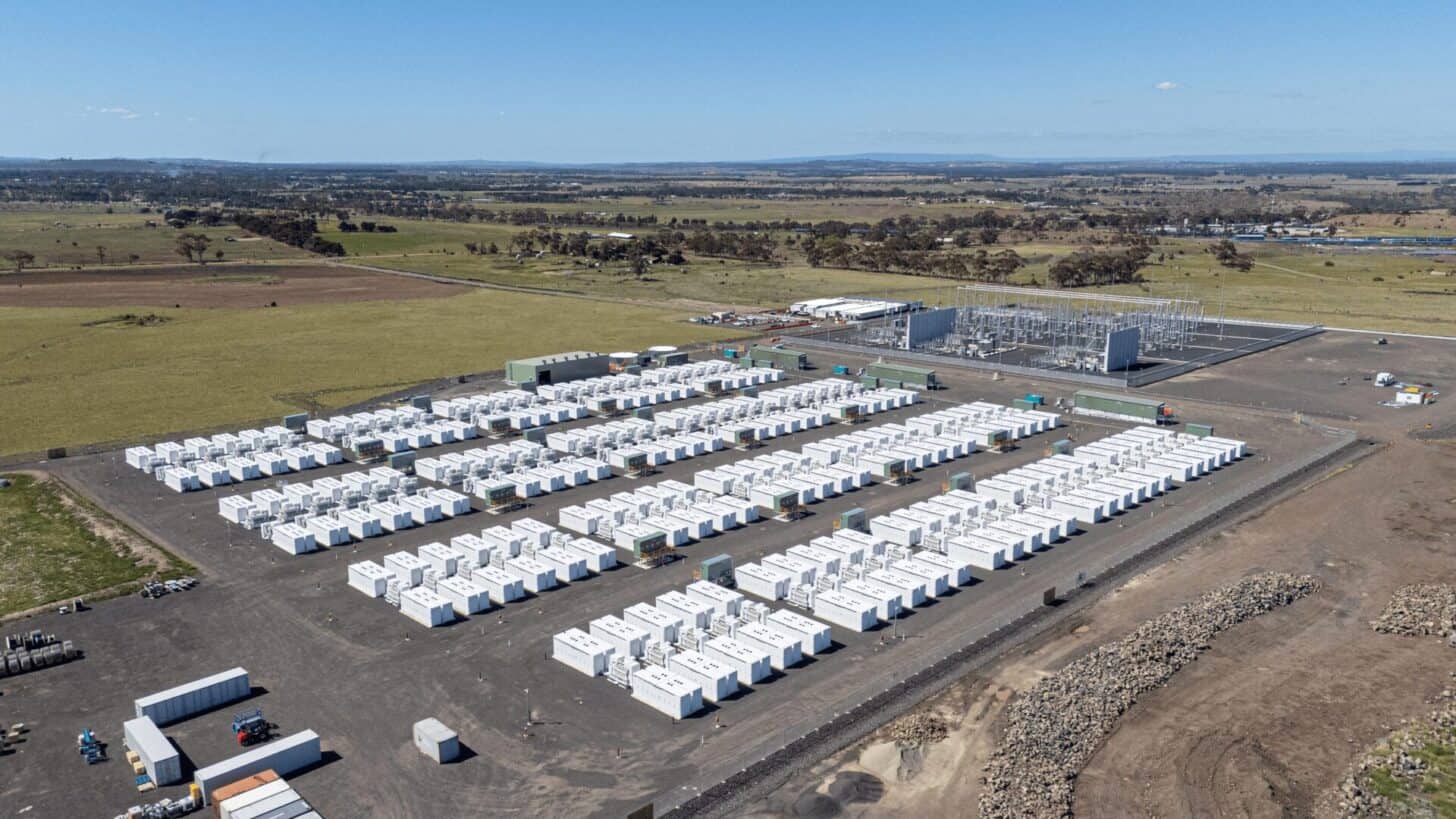
Tesla says it can test how an entire Megapack site handles grid trouble before the battery is connected, using a simulation setup that helped validate 444 units at Australia’s Melbourne Renewable Energy Hub.
The process is called Controller-Hardware-In-the-Loop, or CHIL. It lets Tesla simulate a complete site in real time and check how it responds to faults, changing grid frequency or even a tree falling onto a power line.
Those are the kinds of problems a utility battery needs to handle beyond simply storing electricity. Running them through a simulation gives engineers a way to examine the site’s response before it has to deal with the real grid.
Tesla says CHIL validated Melbourne’s 444 grid-forming Megapacks before grid connection, and credits the approach with helping deliver the 600 MW / 1.6 GWh project “months ahead of schedule.” The timing claim comes from Tesla, which did not provide a detailed comparison with the original schedule in its post.
Grid-forming batteries can also help maintain grid voltage and frequency, which is why testing their behavior involves more than checking how much electricity they hold.
The Melbourne hub is already an operating project. Victoria’s government announced it was fully operational on December 6, 2025, with all 444 units online following commissioning. Tesla’s latest update offers a closer look at the testing behind that deployment.
Australia continues to add large Tesla battery installations. The separate Big Canberra Battery at Williamsdale went online on November 5, using 136 Megapack 2 XL units for 250 MW / 500 MWh of storage. Tesla’s CHIL post focuses on Melbourne and does not say whether the same process accelerated Williamsdale.
Tesla Megapack shared the explanation and a short video on November 10. The earlier operating milestone is documented in Victoria’s December 2025 announcement.
Could testing grid faults before connection help more big batteries reach customers sooner?
Tesla news, every morning.
Software updates, deliveries, FSD rollouts. Five minutes. Free.