Starlink V4 Will Have 10 Times V3’s Capability, Elon Musk Says
Elon Musk says Starlink V4 will have 10 times V3’s capability, with faster laser links and an ambition to fit roughly 100 lasers per satellite.

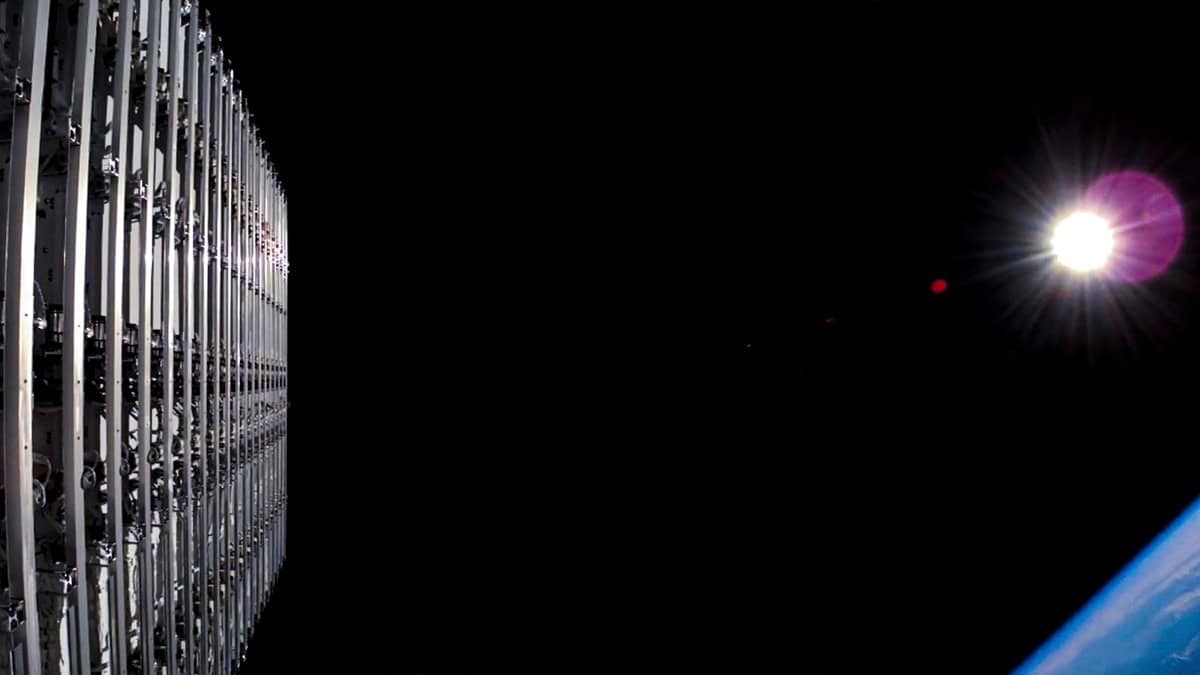
Elon Musk said Starlink version 4 will have 10 times the capability of version 3, with much faster laser links helping SpaceX move more internet traffic between satellites.
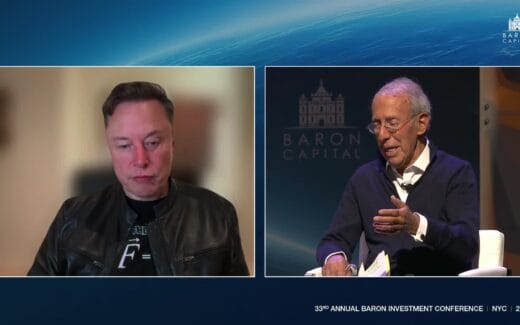
Speaking virtually at Friday’s Ron Baron investment conference, Musk singled out long-distance optical connections as a major opportunity for improvement. He put current laser links at around 100 gigabits per second and the next generation at 10 terabits per second, a 100-fold increase in link speed.
Musk expanded on that vision in a written post, describing roughly 100 lasers per satellite, each operating above 10 Tb/s. With more than 100,000 satellites, he argued, the network “should be able to outcompete undersea cables.”
His argument also rests on how traffic travels: Musk said light moves about 40% faster through space than through cable, while orbital links can take more direct routes instead of following the outlines of land masses.
The laser count remains an engineering ambition, not a finalized specification. Musk mentioned putting 10 lasers aboard during the fireside remarks, compared with roughly 100 in his written post. In a subsequent reply, he explained what reaching the larger number might require.
“If we shrink laser size, assuming 10X closer proximity, and have small gimbal angle for in-plane links, maybe we can get to 100 lasers/sat,” Musk wrote.
Those links carry data between spacecraft, so the figures are not promises of equivalent household download speeds. The broader V4 capability claim and the laser-link speed increase describe different measures of the network’s performance.
SpaceX has already begun the preceding upgrade: Starship Flight 14 deployed 26 operational Starlink V3 satellites in September. Each V3 satellite is designed for 1 Tbps of downlink capacity. SpaceX’s new “Go For Orbit” documentary follows that mission and the work behind its first orbital deployment.
Musk did not give a first V4 launch date in these remarks. For Starlink users, the immediate milestone is the ongoing V3 rollout, while V4 points to a larger role for the constellation in carrying long-distance internet traffic.
Tesla news, every morning.
Software updates, deliveries, FSD rollouts. Five minutes. Free.