Image: Neuralink
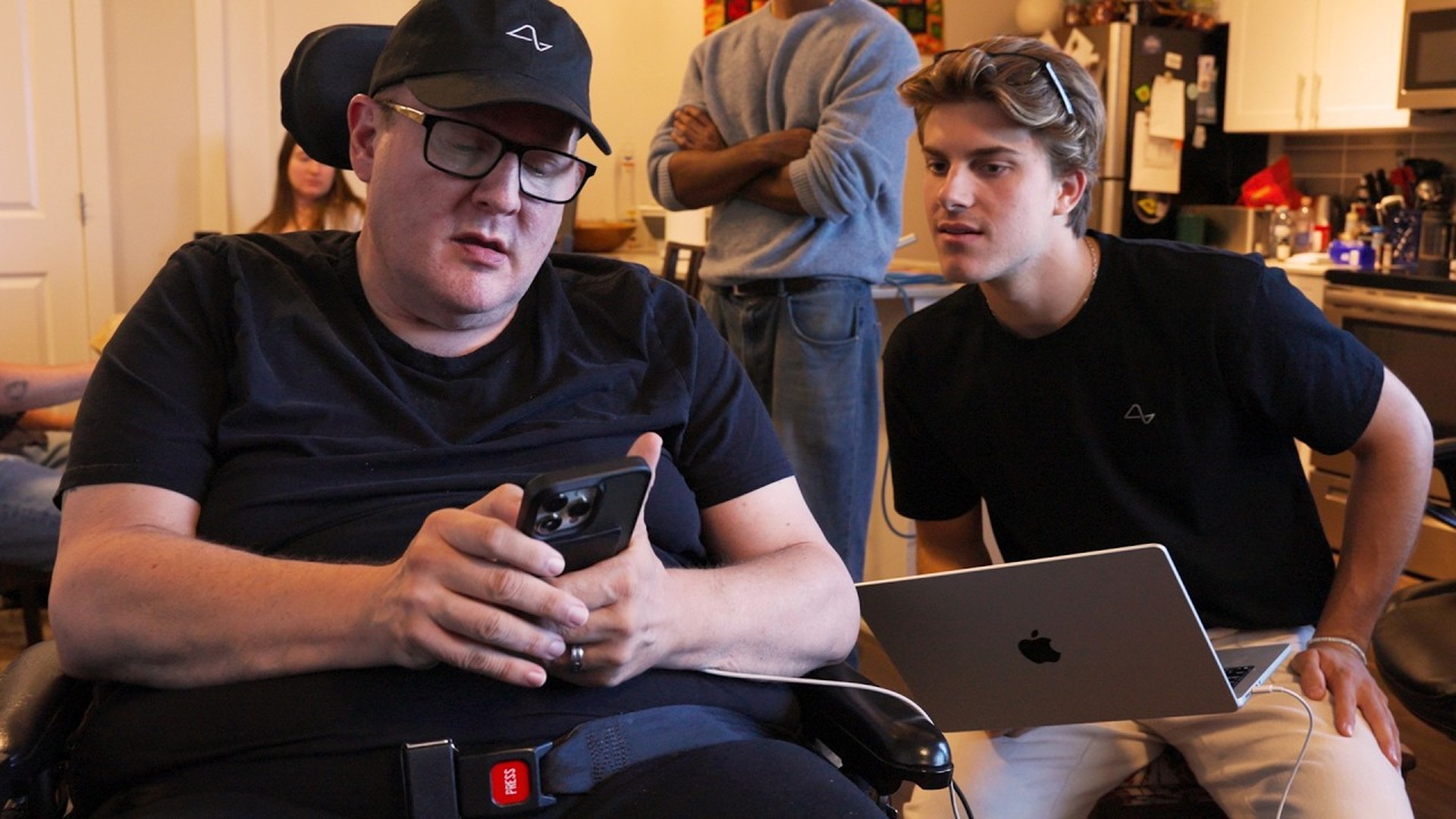
Neuralink engineers spent 72 hours at the home of VOICE study participant Kenneth, building and testing speech tools that let him communicate with thought. The company says the sprint packed weeks of progress into three days.
Kenneth is the same participant who earlier used thought-to-speech to tell his wife “I love you”.
In an October 29 video and matching blog post, Neuralink said the travel hackathon’s goal was to rapidly prototype features that make brain-to-speech use more seamless, then test every one of them with Kenneth on the spot. Devices remain investigational and have not been approved by the FDA or other regulators.
On X the same day, Neuralink framed the visit as a 72-hour push to enhance communicating with thought and listed what the team built. A closing line in the video put the pace plainly: engineers said they “probably got two to three weeks of progress in three days” and “probably tested 30 plus app versions.”
Speech decoding used to need a button to start and stop recording. The team built neural voice activity detection so the app can sense when Kenneth is trying to speak, a step Neuralink called a path toward completely hands-free communication for people with speech impairment. Kenneth set the bar himself in the video: “If I give you two thumbs up, it is perfect.”
Real-time visualizations of his neural activity were another focus. Engineers said decoding models can feel like a black box, so they gave Kenneth live feedback on which attempted movements or forms of speech produced the strongest signals the implant could pick up.
Phone independence mattered most to the household. Until the sprint, Kenneth could only take calls through his wife, Cheryl. The team integrated Bloom, Neuralink’s speech mobile app, with iPhone calling so BCI-generated speech feeds straight into the call microphone without an echo, and they tested an optional greeting that the call is from someone using an assistive device. In the clip, Kenneth quips, “Maybe it would be better to take my own phone calls.”
Other prototypes in the blog include a computer-use agent triggered by thinking “Hey Neuralink” plus a task for Grok to run, Bloom lock-screen Live Activity so speech can start without unlocking the phone, iOS keyboard dictation routed from the BCI, and a faster editing flow for fixing decode mistakes. Neuralink said working beside a participant compressed weeks of feedback loops into hours.
Speech restoration has been moving quickly beyond the lab. Neuralink recently said one ALS participant hit 75 words a minute in week one of speech work, and in September it showed VOICE participant Terry training thought-to-speech with Grok Voice.
Will more VOICE participants get the same home sprint treatment, or will Bloom’s phone and hands-free tools roll out first?