Image: SpaceX
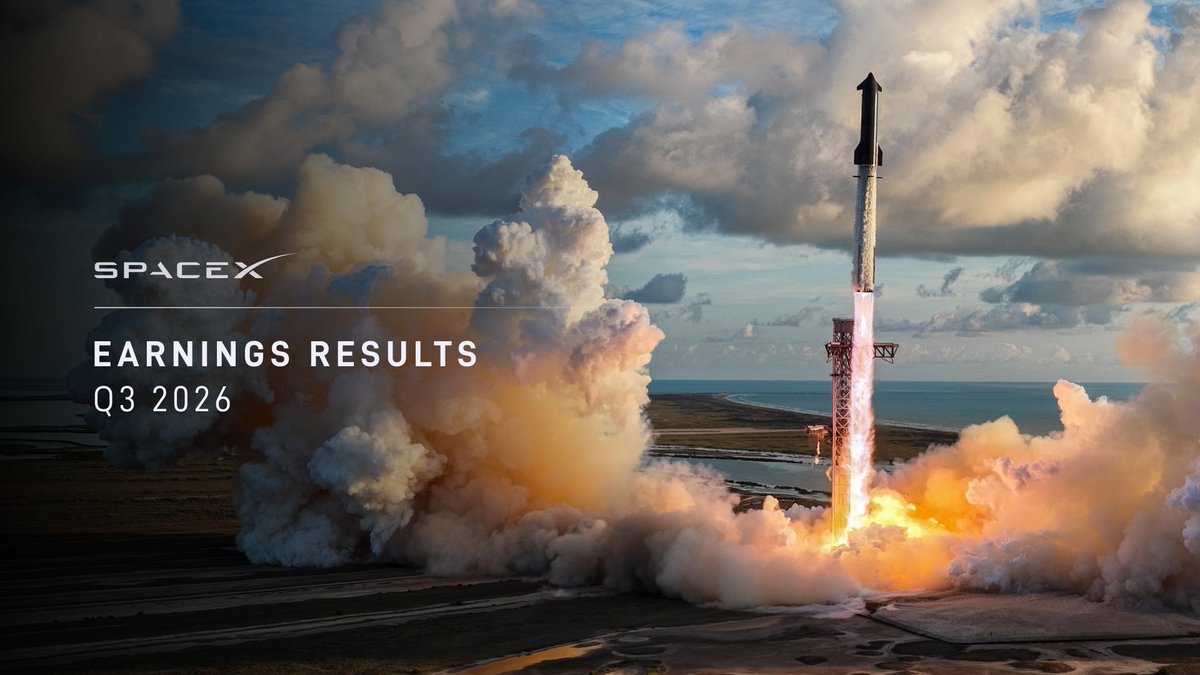
SpaceX made $4.4 billion in net income in the third quarter of 2026 on revenue of $14.6 billion, up 161% from $5.6 billion a year ago. It’s the company’s first profitable quarter since going public in June.
That’s according to SpaceX’s third quarter 2026 results, posted after the market close on Tuesday, October 20. Income from operations came in at $2.8 billion, adjusted EBITDA rose 306% from $2.2 billion a year earlier to $8.8 billion, and diluted earnings were $0.35 per share. A year earlier, SpaceX posted a net loss of $1.1 billion.
The Super Intelligence (SI) segment drove most of the growth. SI revenue rose 195% from the second quarter and 830% from a year ago to $7.6 billion, driven by new cloud services deals, the Cursor acquisition and more Grok use. Advertising accounted for $538 million of that, up from $367 million in the second quarter, with the rest coming from SI solutions and infrastructure. The segment also turned an operating profit of $431 million, compared with a loss of $1.3 billion last quarter, even after $1.2 billion in share-based compensation tied to the Cursor deal, and its adjusted EBITDA reached $5.0 billion. Nameplate compute reached 1.7 GW as of September 30, up from 1.4 GW at the end of June. Cursor, which SpaceX closed on August 14 at an implied equity value of $60 billion, added $608 million in revenue through the end of September.
Starlink connectivity revenue rose 69% year over year to $5.2 billion, with consumer revenue up 57% to $3.1 billion and enterprise and government revenue up 91% to $2.1 billion. Starlink reached 13.6 million consumer subscribers, up 1.6 million from 12.0 million in June, and average revenue per consumer subscriber rose 5% from the second quarter to $69 a month. As of September 30, Starlink had coverage in 174 countries and 11,100 satellites in orbit, a count that now includes satellites approved for de-orbit, and SpaceX says more than 3,800 aircraft now have Starlink on board.
The Connectivity segment is also SpaceX’s biggest earner, with operating income of $2.37 billion in the quarter, up 99% from a year ago, and segment adjusted EBITDA of $3.5 billion, up 82%.
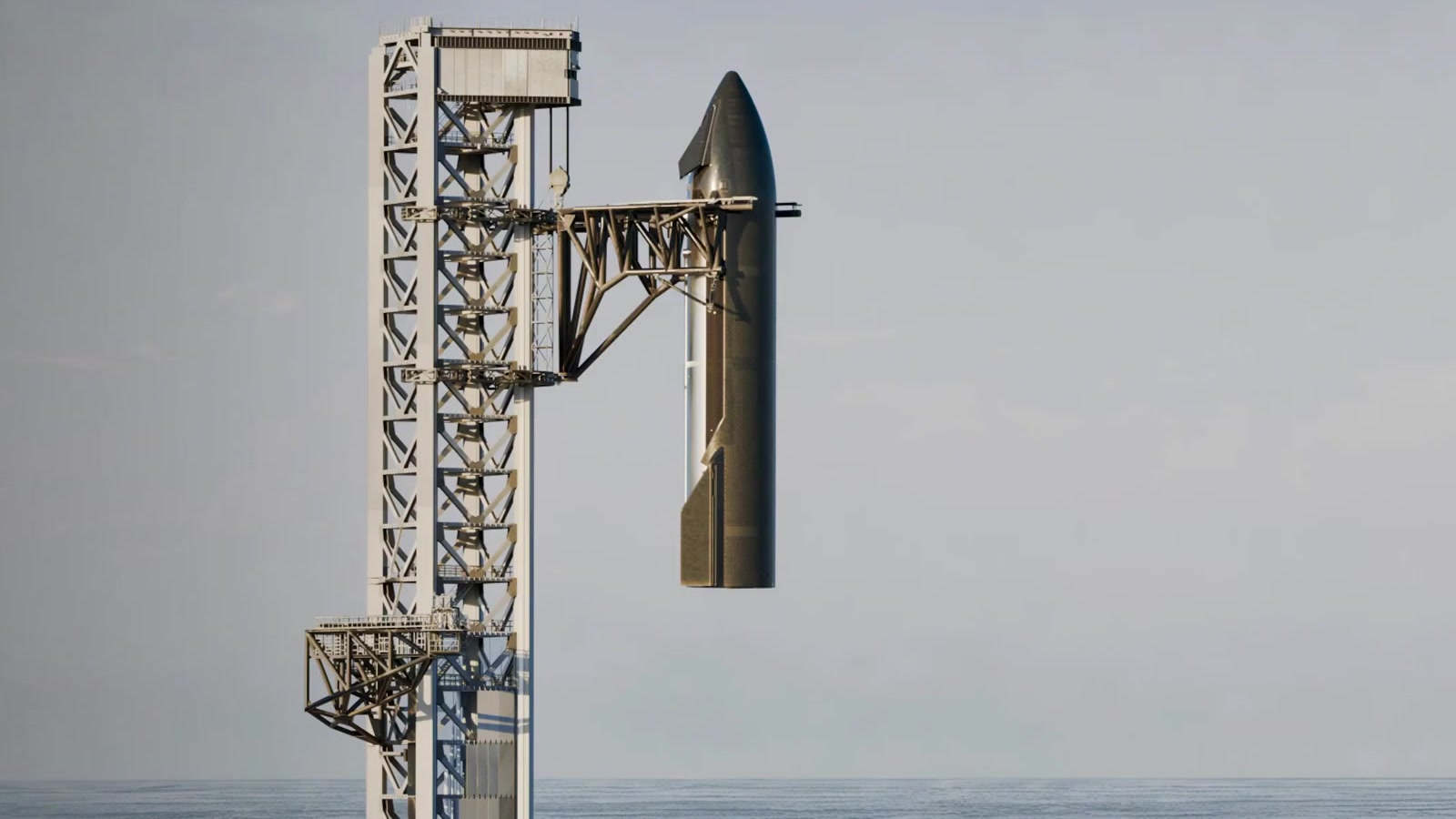
On the launch side, SpaceX flew 35 missions in the quarter, with 12 for customers and 23 internal, down from 44 a year earlier, and carried 476 metric tons to orbit. That brings the year to date to 113 launches and 1,517 metric tons to orbit. Space revenue still climbed 84% from the second quarter to $1.8 billion, including $1.13 billion in launch services revenue, and the quarter included SpaceX’s first revenue-generating Starship mission, Flight 14, which delivered 26 Starlink V3 satellites. The Space segment posted an operating loss of $7 million, narrowed from a $542 million loss in the second quarter, as SpaceX keeps spending heavily on Starship research and development.
SpaceX also grew its customer launch pipeline during the quarter, signing three more NASA crew missions to the International Space Station, 18 National Security Space Launch missions, three commercial Starfall missions and a contract to deliver a payload to the lunar surface with Starship. SpaceX didn’t give numeric guidance in the release and said it would cover its outlook on the live webcast at 1:30 PM PT.
SpaceX’s capital expenditures hit $19.6 billion in the quarter, with $16.4 billion going into the SI business as SpaceX keeps building out Colossus II, bringing capex for the first nine months of the year to $48.1 billion. Revenue over the same nine months reached $27.1 billion, nearly double the $13.7 billion SpaceX brought in during the same stretch of 2025. The company ended September with $51.3 billion in cash and cash equivalents plus $38.6 billion in marketable securities, compared with $24.7 billion in cash and no marketable securities at the end of 2025.
This is only SpaceX’s second report as a public company. Its first earnings report in August showed $7.8 billion in second quarter revenue, a $541 million net loss and 12 million Starlink subscribers, so revenue nearly doubled in three months and the bottom line flipped from red to black.
The company closed the biggest IPO in history in June, raising roughly $85.7 billion after pricing shares at $135 under the SPCX ticker. Since then, SpaceX has rebranded its AI arm as SpaceXSI, closed the Cursor deal and, after the quarter ended, agreed on October 8 to buy 800 MHz spectrum licenses for its Starlink Mobile push, a deal expected to close in the first half of 2027.
SpaceX and Tesla are also building Terafab, the chip plant in Grimes County, Texas, that Elon Musk says will out-produce most countries in a single building, and SpaceX has also announced Starbase, Louisiana, a new spaceport built for thousands of Starship flights a year with a first launch targeted for 2029.
Did SpaceX’s first profitable quarter as a public company change how you see the stock?