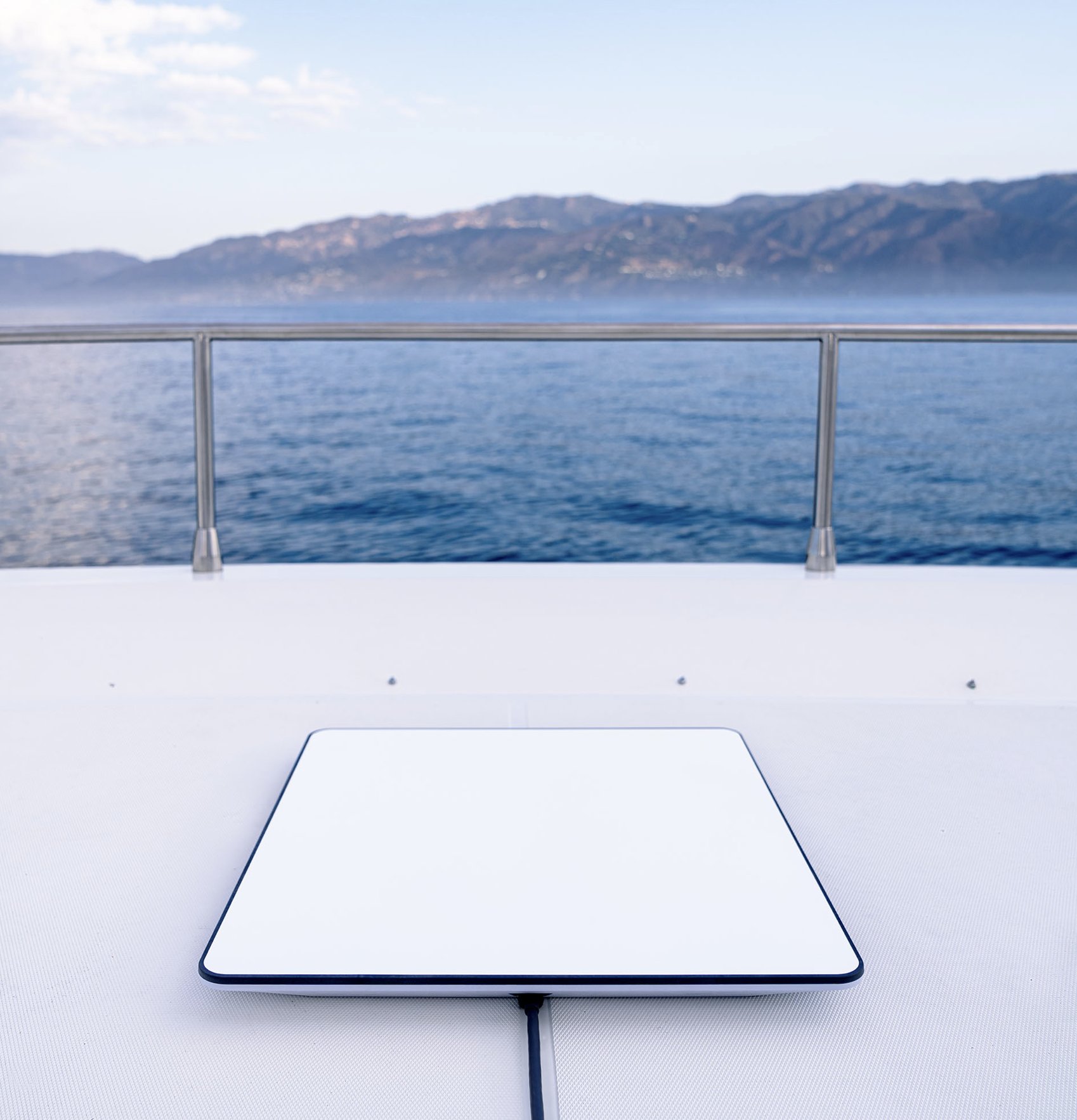
Photo: SpaceX
Starlink is continuing its steady push into the maritime sector, with Hyundai Glovis announcing it has begun installing SpaceX’s satellite internet service across its global shipping fleet.
According to a report from Korea JoongAng Daily, Hyundai Glovis has started rolling out Starlink across 45 vessels, including car carriers and bulk carriers. Installations are already underway on ships scheduled to call at Korean ports this year, marking a significant upgrade in onboard connectivity for the Hyundai Motor Group logistics arm.
Starlink has been gaining traction in the shipping industry due to its low Earth orbit (LEO) satellite architecture, which enables much faster data transmission than traditional geostationary satellite systems. While legacy satellites orbit roughly 36,000 kilometers above Earth, Starlink’s constellation operates at around 550 kilometers. That difference translates directly into real-world performance gains. Hyundai Glovis says downloading a 1.4GB file at sea can take as long as 15 minutes using conventional satellite internet, but just two minutes with Starlink.
Beyond faster internet speeds, Hyundai Glovis plans to use Starlink to strengthen its maritime safety response systems. The company says improved coverage and low-latency communication will allow vessels to maintain immediate contact with land-based operations during emergencies, including equipment failures and severe weather events. It also aims to enhance its emergency response capabilities during long-distance voyages.
“A low Earth orbit satellite network will lay the foundation for improving both the safety and efficiency of vessel operations,” a Hyundai Glovis representative said. “We will actively embrace new technologies to ensure safe and efficient operations and take the lead in building a sustainable maritime ecosystem.”
Looking further ahead, Hyundai Glovis sees Starlink as a foundational technology for next-generation smart shipping. High-bandwidth connectivity is critical for enabling autonomous navigation, AI-based predictive maintenance, and other data-intensive systems required for the digital transformation of the maritime industry.
While Starlink’s recent high-profile airline partnerships have drawn much of the attention, Starlink Maritime continues to expand quietly but rapidly. SpaceX recently also partnered with the Japan Coast Guard, and more than 150,000 vessels are now connected worldwide, serving everything from cargo ships and tankers to cruise liners. In 2025 alone, Starlink provided connectivity to more than 20 million cruise passengers, underscoring how quickly satellite internet is becoming a standard fixture at sea.


