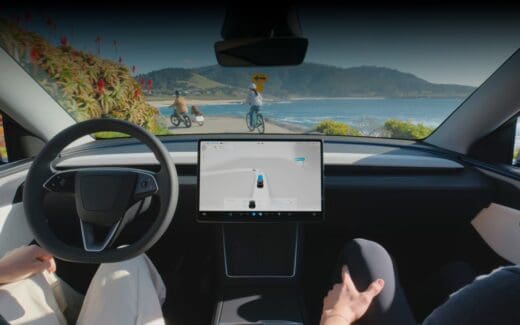
Tesla Cars Are Sticking With AI4 as AI5 Goes to Optimus, Musk Says
Elon Musk says Tesla cars will stick with AI4 as AI5 goes to Optimus. Here’s what AI4 already does with the new FSD v15 Reality View.
Tesla’s cars will stick with the AI4 computer while the next-generation AI5 chip goes to its Optimus robot, Elon Musk says. A Tesla owner with older Hardware 3 asked whether it was worth waiting for an AI5 car and whether an upgrade was still planned. Musk replied on X that cars would remain on AI4, which he believes has enough computing power to drive better than a human. He didn’t give a timeline for how long cars would stay on AI4 or when older cars might get a hardware upgrade.
AI3, also called Hardware 3 or HW3, runs the older FSD v14 Lite branch, not v15. Musk previously said Tesla would offer a hardware upgrade or a discounted trade-in to owners who bought Full Self-Driving outright. He didn’t give a retrofit date in this exchange, and Tesla hasn’t announced v15 Lite for HW3.
Tesla had already signaled this direction in April, when Musk said AI5 wasn’t immediately needed in cars and put Optimus and data centers first. He separately estimated that AI5 would offer about 12 times the computing power of AI4.
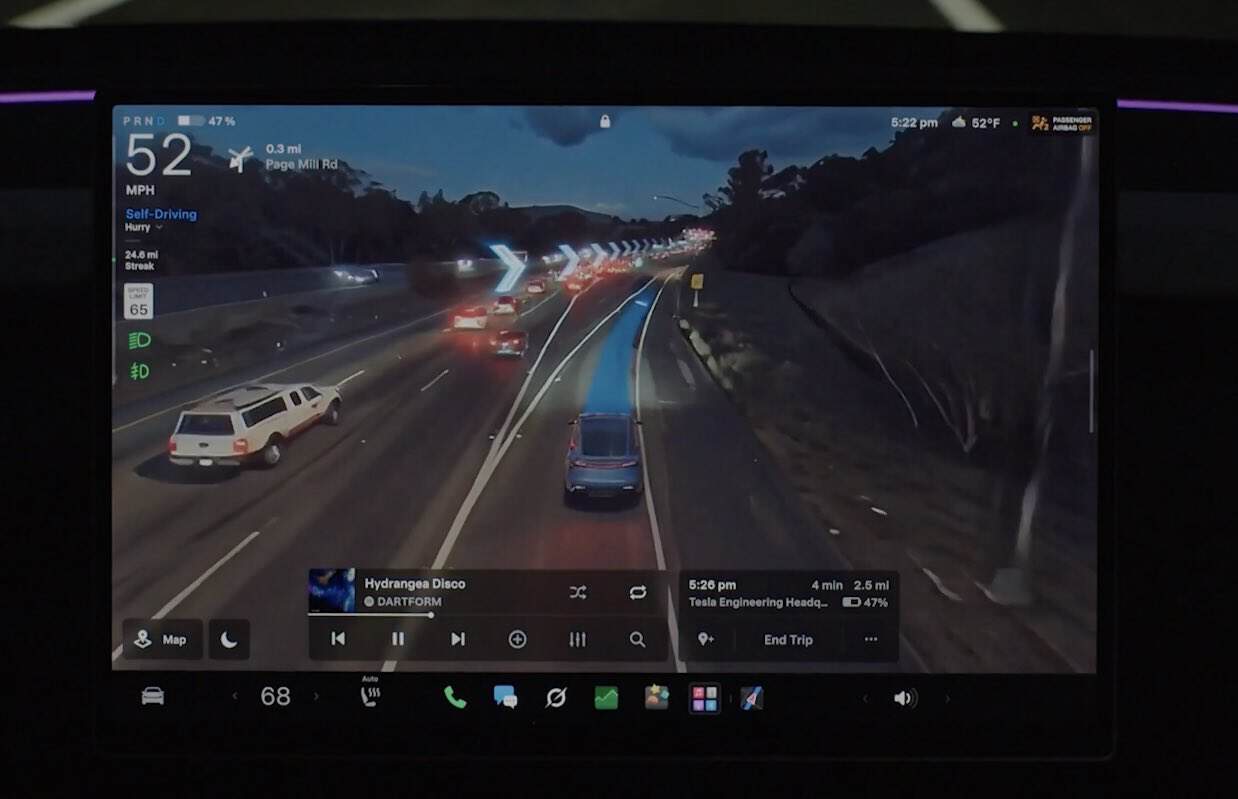
Reality View shows what AI4 can already do. Tesla’s new overhead display builds the driving scene at 36 frames per second, and Musk says Tesla could cut the delay before those images reach the screen by about 35%. Tesla hasn’t announced the change for owners.
Reality View arrived with Full Self-Driving (Supervised) v15. Instead of showing a feed from a real camera above the Tesla, the screen reconstructs the road from the car’s own camera images. The view can show nearby cars and lanes, along with arrows for upcoming turns. Tesla owner Zack shared a clip of what that looks like in the car.
Musk explained how Tesla builds the view in a post on X. Since last year, he said, Tesla has used a larger AI model to make simulated training footage. A smaller model in the car shares the driving system’s work of interpreting the cameras, but builds the picture on the screen separately. It uses information from previous images and makes the display video in batches of eight frames.
That takes about half of one processing engine in Tesla’s AI4 computer, according to Musk. He said feeding fresher camera information into the image-building process could shorten the display delay. The 35% figure is about the time it takes to draw the view, not a change to how quickly FSD reacts on the road.
FSD v15 remains supervised, so drivers still need to watch the road and be ready to take over. If you’ve tried Reality View, have you noticed any delay on the screen?
Tesla news, every morning.
Software updates, deliveries, FSD rollouts. Five minutes. Free.