ULA Loses 40 Amazon Leo Satellites as Musk Offers Support
ULA lost 40 Amazon Leo satellites in a Vulcan launch failure. Amazon has 392 satellites still in orbit, while Elon Musk offered support.


Amazon has lost 40 satellites intended for its Leo internet network after a United Launch Alliance rocket failed on Sunday, November 15. Elon Musk responded with a message of support for the launch provider competing with SpaceX.
ULA said its Vulcan rocket encountered an anomaly about 10 minutes after lifting off from Space Launch Complex 41 at Cape Canaveral Space Force Station in Florida. The mission did not deliver its Amazon payload to orbit.
The company had not identified the cause in its initial statement. It said it would investigate with its customer and other appropriate organizations, establish corrective action and work toward returning to flight. That leaves the failure mechanism and a return date unconfirmed.
40 Satellites Lost, 392 Still in Orbit
The LV-01 mission was supposed to carry 40 Amazon Leo satellites into low Earth orbit. Amazon lists the launch at 12:40 p.m. EST on November 15 and confirms the payload was lost.
Amazon had successfully deployed 396 production satellites across its preceding 14 missions, based on the individual payloads in its launch log. That cumulative figure is not the number still circling Earth.
Satellite researcher Jonathan McDowell’s latest catalogue lists 392 Amazon Leo satellites currently in orbit. His tally records zero satellites in orbit from the failed Vulcan mission. The 392 figure describes spacecraft remaining in orbit, not a claim that every satellite is already providing commercial internet service.
Amazon is also using other launch providers. Its next listed mission is an Arianespace launch carrying 36 satellites, targeted for no earlier than November 23. That remains a planned launch, not an addition to the existing fleet.
Musk Wishes ULA a Quick Return
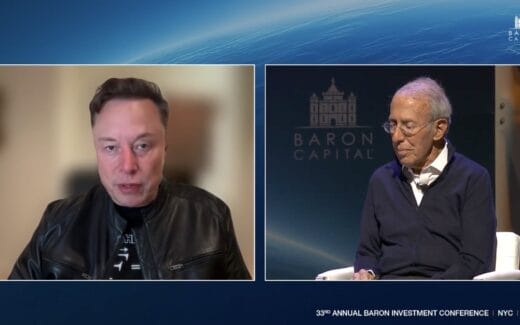
Replying directly to ULA’s announcement, Musk wrote: “Sorry to hear this. Hope you are back to flight soon.”
Amazon Leo, formerly Project Kuiper, competes with SpaceX’s Starlink satellite internet network. SpaceX has also launched Amazon satellites aboard Falcon 9, making it both a competitor and a launch supplier.
Amazon is standing by its launch partner. In a post sharing ULA’s announcement, Amazon Leo said: “There is risk with any launch, and that’s especially true for inaugural missions like LV-01.” The company described ULA as a trusted partner and said it believes the team will learn from the setback and deliver on its long-term Vulcan plans.
For both companies, the immediate question is what the investigation finds and what must change before another Vulcan flight.
The failure details come from ULA’s statement and Amazon’s mission log. Musk’s reply appears in the same thread; the current orbital count is from McDowell’s catalogue.
Tesla news, every morning.
Software updates, deliveries, FSD rollouts. Five minutes. Free.