Tesla Patent Gives Robot Fingers Tendon-Like Floating Cables
The U.S. Patent Office published Tesla’s underactuated robot-hand filing that drives two finger joints with one floating tendon-like cable.

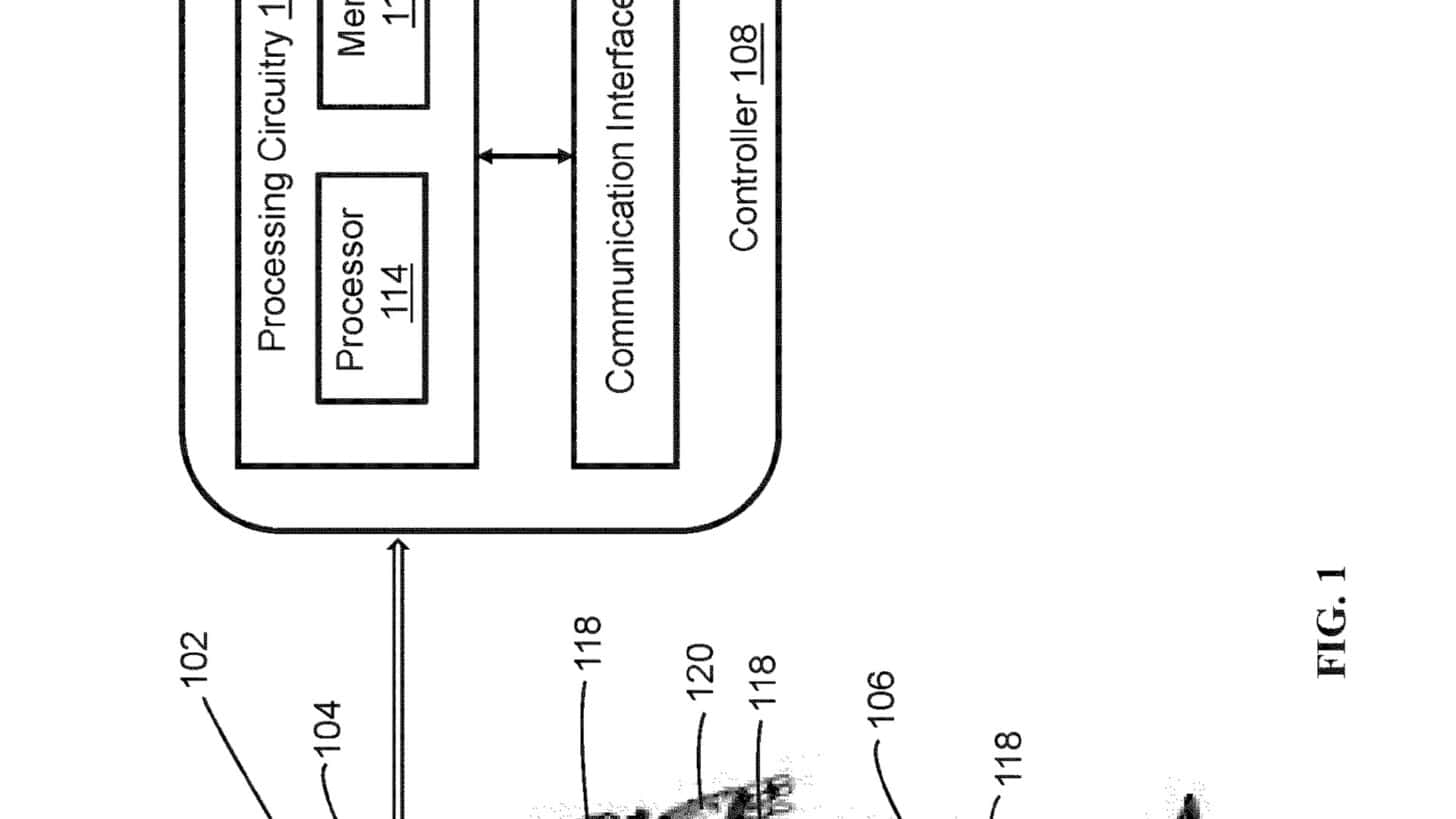
The U.S. Patent and Trademark Office published a Tesla robot-hand application on Thursday that describes fingers driven by a single cable meant to work like a tendon, with a thickened tip that floats inside the fingertip until a pull catches it on a ledge.
The filing is titled “Underactuated hand with cable-driven fingers” (Pub. No. US 2026/0346473 A1). Tesla’s U.S. application was filed March 20, 2025 as the national-stage entry of PCT/US2023/034306, which was filed October 2, 2023 and claims priority to September 30, 2022 provisionals. Inventor Michael Leddy is listed on the international version. Patent tracker Patentlyze flagged the November 5 publish.
Each finger has two hinged sections, a proximal member nearer the palm and a distal fingertip section. One actuator pulls a cable that runs along both sections instead of wrapping around the joints. The cable’s end is thicker than the cable itself, so when the motor pulls, that end engages the fingertip and the finger curls. The filing says the end can float in a pocket or channel and can be a potted end or a potted insert.
That underactuated setup is meant to behave a bit like a human finger grabbing a mug: whichever section hits the object first can stop, and the other keeps closing. Tesla also describes torsion springs at each pivot for stiffness, Hall-effect sensors paired with magnets to read joint angle, and a curved surface between sections so a metal cable bends on a gentler radius instead of snapping.
The application frames hands as one of the hardest robot parts to design and shows the fingers on a humanoid figure, though it never names Optimus.
This is an earlier cable architecture than the April international patents for a forearm-actuated hand with far more degrees of freedom. In October, a separate Tesla filing described soft tactile “skin” for a robot thumb, palm and fingers, in an application the USPTO published in October.
A patent application is not a product commitment. The text gives no measured grip strength or cable lifespan, and Tesla has not said whether this floating-tendon finger is what ships on Optimus 3. Still, it goes after the same hard part Elon Musk keeps naming: a hand that can hold on without a parts count that kills volume production.
Tesla news, every morning.
Software updates, deliveries, FSD rollouts. Five minutes. Free.