Photo: Ford
The EV gold rush in Detroit has officially hit a wall. According to a new report from The Wall Street Journal, the Detroit Big Three — General Motors, Ford Motor, and Stellantis — have collectively racked up more than $50 billion in write-downs tied to electric vehicle investments, as cooling demand and shifting regulations force a major reset in strategy.
As detailed by The Journal, EV sales in the U.S. fell more than 30% in the fourth quarter after the $7,500 federal EV tax credit expired in September. Demand cratered not only for mainstream models but also for headline-grabbing vehicles like Tesla’s Cybertruck and Ford’s electric pickup.
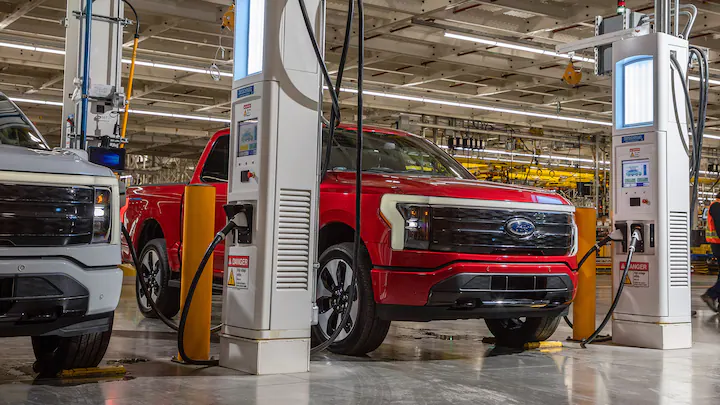
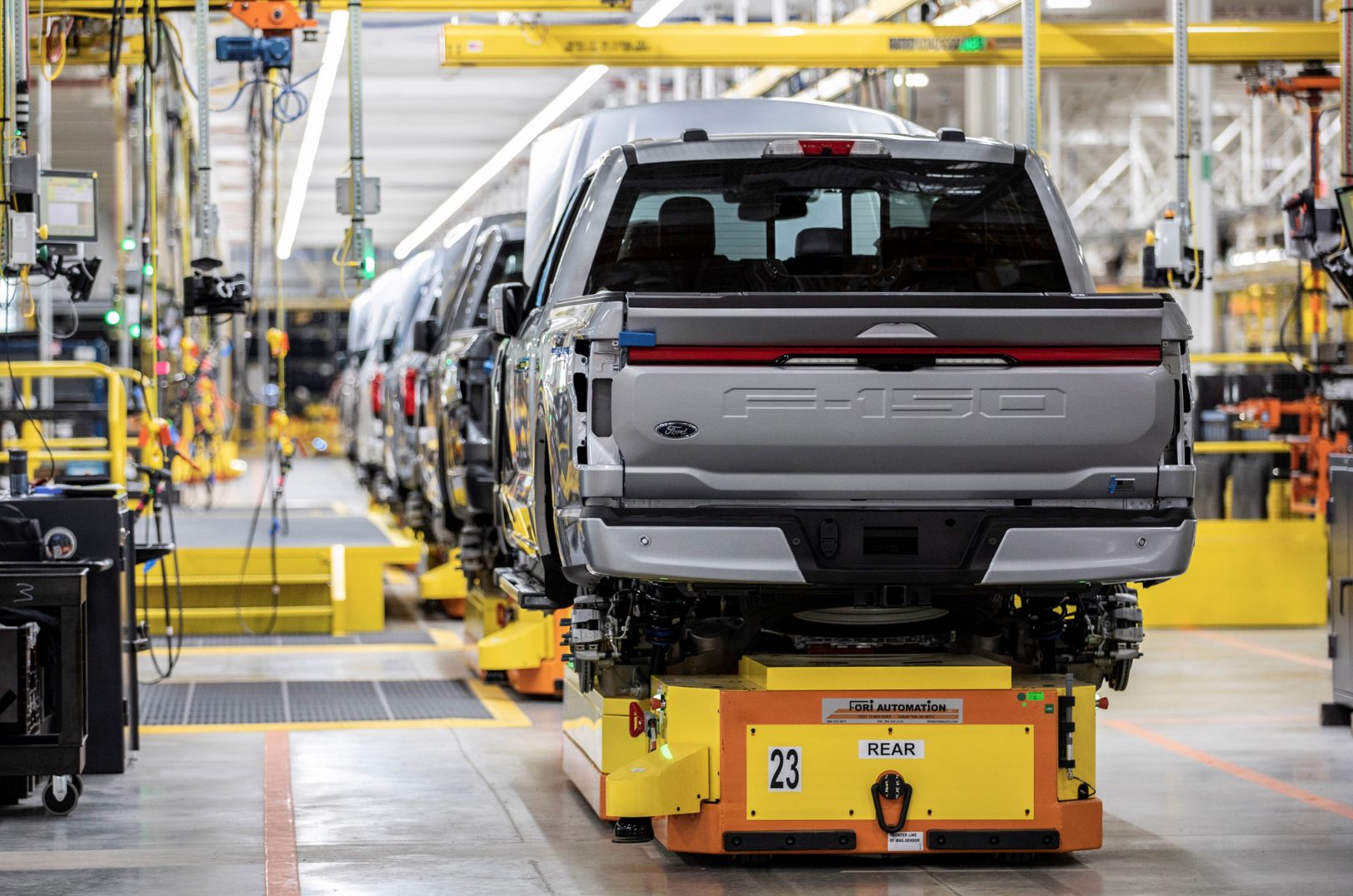
The fallout has been swift. Ford recently pulled the plug on its all-electric F-150 Lightning plans and took a staggering $19.5 billion write-down tied largely to EV investments. At the same time, the company has pivoted toward a strategy with more mainstream appeal, now targeting a $30,000 EV with Level 3 “eyes-off” driving by 2028.
GM hasn’t retreated as aggressively but has still been forced to cut EV production shifts at its Factory Zero plant in Detroit-Hamtramck amid slowing demand. Meanwhile, Stellantis booked the largest single EV-related charge of the group, with CEO Antonio Filosa admitting the pace of the energy transition had been overestimated and “distanced us from many car buyers’ real-world needs.”
The regulatory backdrop hasn’t helped. Republican lawmakers scrapped the federal EV tax credit last fall and eliminated fuel-efficiency mandates, further dampening incentives for automakers and consumers alike.
The net result? More than $20 billion in previously announced EV and battery plant investments were wiped out last year, marking the first net annual decline in clean-economy manufacturing investments in years.
While EV adoption continues to grow in markets like China — where BYD has overtaken Tesla globally — Detroit’s aggressive electrification push is clearly undergoing a painful recalibration.
The EV transition isn’t dead. But for America’s legacy automakers, it just got a lot more expensive.