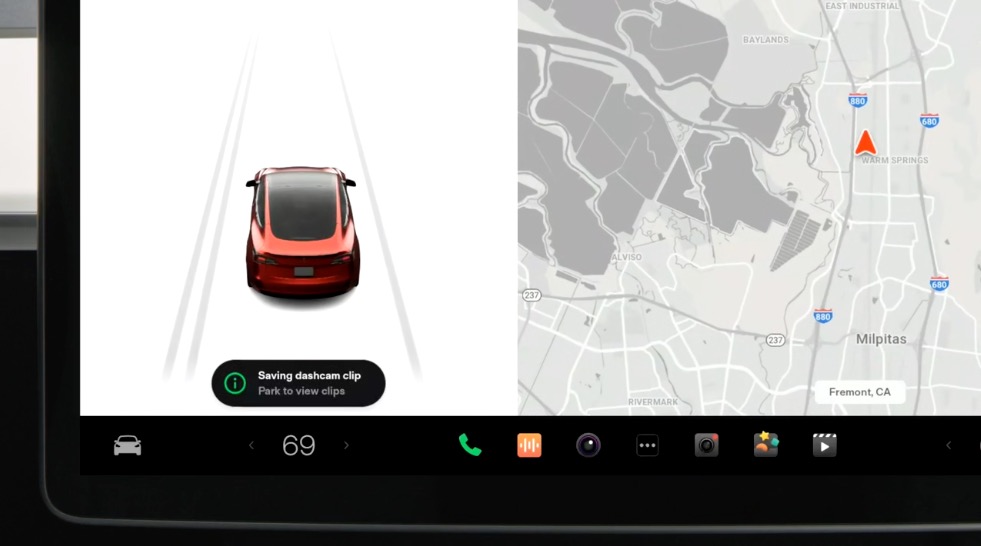
Tesla is finally addressing a long-standing grievance for owners by significantly expanding the rolling recording buffer for its built-in Dashcam. For years, Tesla vehicles have been capped at a mere 60 minutes of rolling footage, regardless of how much storage was actually available on the connected USB drive. Once that hour was up, the oldest footage was simply overwritten, often leading to lost evidence if an owner didn’t manually save a clip immediately after an incident.
According to recent release notes for an upcoming software update first spotted in China and shared by Not a Tesla App, Tesla is moving toward a dynamic recording system. This change allows the vehicle to scale the “Recent Clips” buffer based on the total capacity of the storage device. Owners using a standard 128GB drive can now expect to retain about 3 hours of footage. However, those who have invested in a 1TB SSD or larger will see that limit jump to a massive 24 hours.
The move is a massive win for those who might not notice a door ding or a small scuff until the next morning. This update ensures that as much video as possible is retained for review before the loop starts over.
This upgrade comes after Tesla recently made significant improvements to Dashcam features, including rolling out pinch-to-zoom and pan support to its Dashcam Viewer last month. What’s more, Tesla also gave the Dashcam Viewer a major upgrade with December’s 2025 Holiday Update, introducing new overlays for speed, steering angle, and self-driving state.
The upcoming upgrade is a perfect example of how Tesla uses over-the-air updates to not only introduce new features to its global fleet but also improve existing ones. While dynamic recording is currently rolling out to employees in China, it likely won’t be long before North American owners see the update hit their vehicles — maybe a few weeks.
To take full advantage of the 24-hour window, you’ll want to ensure your drive meets Tesla’s sustained write speed requirements of 4 MB/s. High-quality portable SSDs like the Samsung T7 remain the gold standard for handling the constant data throughput and temperature swings inside a parked car.

