Tesla is partnering with Chinese tech giant Baidu to improve its self-driving technology in China after facing criticism from customers over a recent software update, according to sources familiar with the matter, reports Reuters.
Baidu recently sent engineers from its mapping team to Tesla’s Beijing office to help better integrate its detailed navigation data, such as lane markings and traffic light signals, with Tesla’s Full Self-Driving (FSD) Version 13 software. The goal is to improve how Tesla’s self-driving system understands and navigates Chinese roads.
The collaboration comes as Tesla faces tough regulations in China that limit how it can use data to train its AI systems. Unlike in the U.S., where Tesla’s AI can learn from data collected by vehicles on the road, China’s strict data laws prevent Tesla from transferring data abroad. This restriction has slowed the development of Tesla’s FSD system in China, causing frustration among drivers.
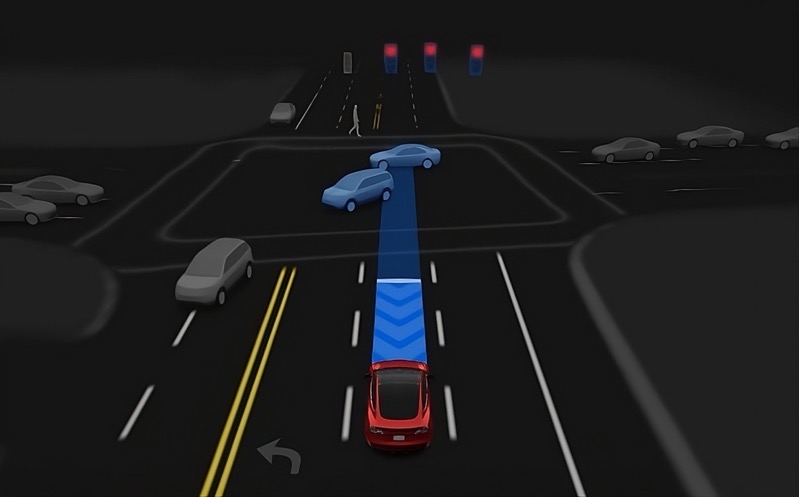
Tesla’s FSD system is designed to help cars navigate complicated traffic conditions using advanced AI. But its latest update in China, released in February, fell short of expectations. Drivers reported that the system made mistakes like switching to the wrong lane or missing red lights—issues blamed on the software’s limited knowledge of Chinese roads.
Baidu, which has been providing navigation maps to Tesla since 2020, is expected to help resolve these problems by supplying more detailed and up-to-date map data.
Local competitors like BYD and Xpeng offer similar driver-assistance systems without charging extra—unlike Tesla, which adds a 64,000 yuan ($8,834) fee for its FSD system. Features are limited though in China, compared to FSD in the U.S.
