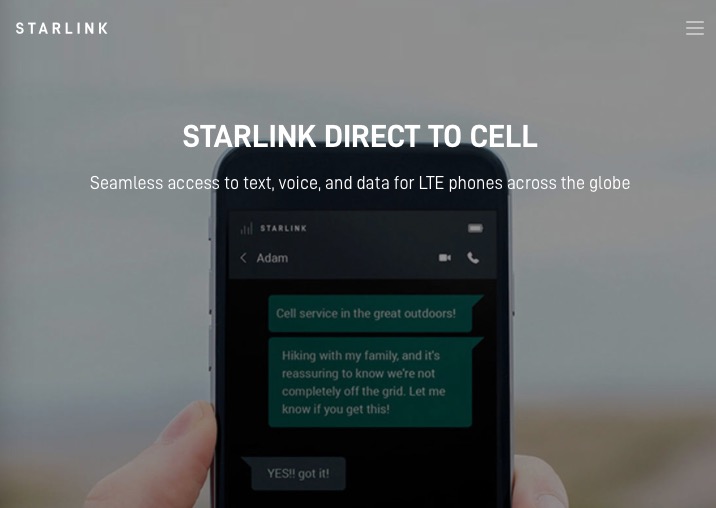
SpaceX is preparing to take a major leap forward with Starlink’s Direct to Cell (DTC) service. Speaking at the World Space Business Week event in Paris on Monday, SpaceX President and COO Gwynne Shotwell said the company plans to begin phone-based testing by late 2026 on the $17 billion worth of wireless spectrum it recently bought from EchoStar (via @SERobinsonJr).
Shotwell explained that the project requires more Starlink satellites in orbit, collaborations with chipmakers to integrate compatible hardware directly into smartphones, and global agreements with mobile operators to wholesale network capacity. “This is the start, by the way, of a huge amount of work,” Shotwell said. “We’re working with chip manufacturers to get the proper chips in phones.”
Starlink launched its first Direct to Cell satellites back in January 2024 and completed the deployment of its first-generation constellation earlier this summer. The system already provides satellite messaging and recently expanded to support data connectivity for apps like Google Maps, X, and WhatsApp. In the U.S., T-Mobile has been offering a Starlink-powered “T-Satellite” service, while Rogers in Canada has also been testing a similar solution.
The move to acquire EchoStar’s AWS-4 and H-block spectrum licenses will allow SpaceX to shift from carrier-only partnerships to offering first-party cellular connectivity worldwide. The company is also developing next-generation Direct to Cell satellites, driven by custom silicon and advanced phased array antennas, that will offer a 100x capacity increase over the first-generation system.
Shotwell also touched on Starship’s progress, highlighting the success of its 10th flight earlier this summer. “My Starship team needed that win… I was really pleased. They did a great job. We met every mission objective that we wanted to.” She added that the first launch of Starship V3, a version designed to enable propellant transfer in low Earth orbit, is targeted for late 2025 or early 2026.
With exclusive spectrum, upgraded satellites, and the heavy-lift capabilities of Starship, SpaceX is positioning Starlink Direct to Cell as the first global 5G alternative delivered directly from orbit, aiming to eliminate mobile dead zones once and for all.
